
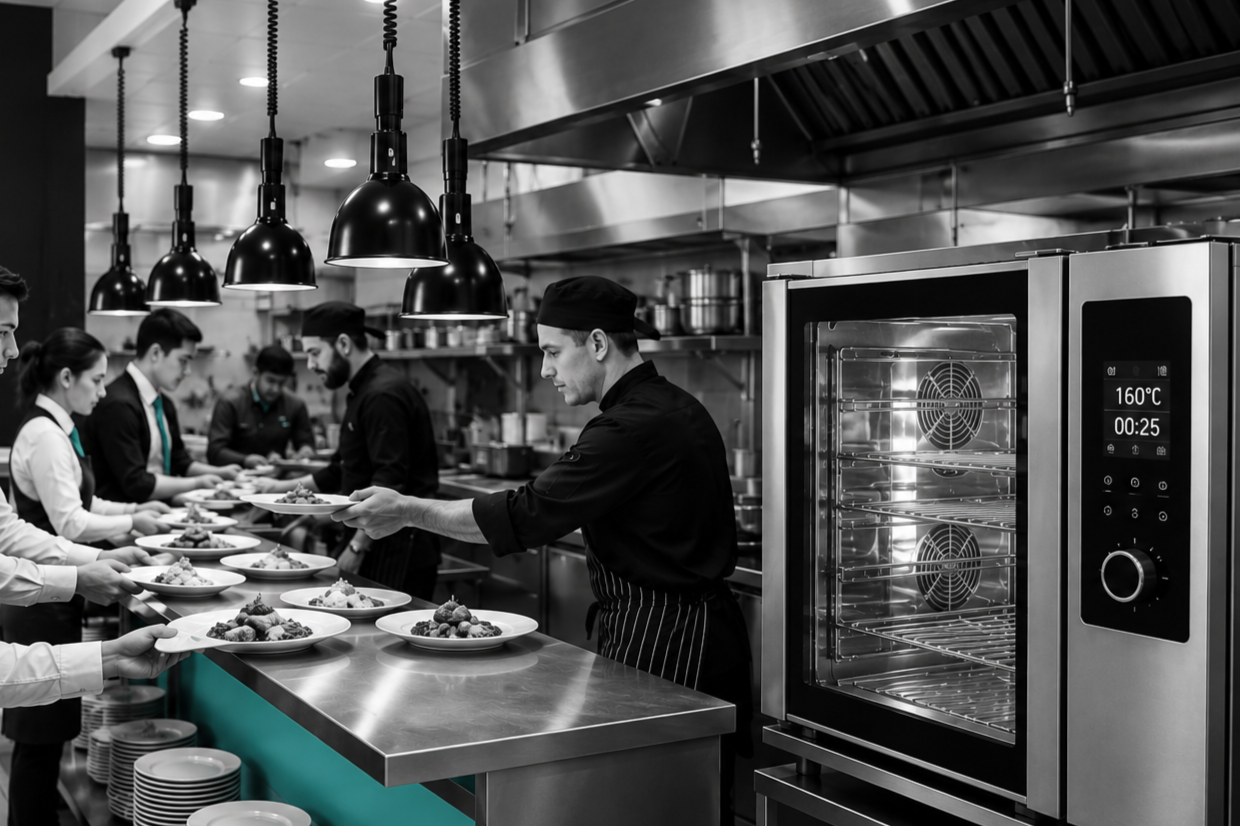
Commercial Convection Oven Repairs Sydney
Expert Repairs for Commercial Fan-Forced Ovens
A commercial convection oven is one of the hardest-working appliances in a professional kitchen. Whether you're baking, roasting, reheating or finishing dishes during a busy service, consistent temperature and reliable airflow are essential for maintaining food quality and keeping customers happy.
When a convection oven develops a fault, even a small issue can quickly affect production. Uneven cooking, temperature fluctuations, slow heat-up times or complete equipment failure can lead to wasted food, delayed service and costly downtime.
Worldwide CDM provides professional commercial convection oven repairs throughout Sydney, helping restaurants, cafés, bakeries, hotels, clubs and commercial kitchens restore their equipment quickly and efficiently.
As a family-owned business with more than 30 years of experience repairing commercial catering equipment, we understand how important reliable cooking equipment is to your operation. Our technicians take the time to accurately diagnose faults, explain the cause of the problem and recommend the most appropriate repair based on the condition of your equipment.
Whether your convection oven has stopped heating altogether, is cooking inconsistently or has developed an electrical fault, we're here to help.
Click Here To Call For Urgent Repairs
What Is a Commercial Convection Oven?
Many people use the terms convection oven, fan-forced oven and commercial fan oven interchangeably. While the terminology varies, they all describe an oven that uses forced air circulation to distribute heat more evenly throughout the cooking chamber.
Unlike a conventional oven that relies largely on natural heat movement, a convection oven uses an internal fan to circulate heated air continuously around the food. This improves heat distribution, reduces temperature variation between shelves and helps food cook more consistently.
For busy commercial kitchens, these benefits are significant. Faster cooking times, improved consistency and better control over food quality all contribute to a more efficient operation.
Commercial convection ovens are commonly used for:
Baking pastries and bread
Roasting meat and vegetables
Cooking frozen products
Reheating prepared meals
Finishing menu items before service
General-purpose commercial cooking
Because they operate for long hours under demanding conditions, commercial convection ovens require regular maintenance and occasional repairs to continue performing reliably.
How Commercial Convection Ovens Work
Understanding how a commercial convection oven operates can help explain why certain faults occur and why professional diagnosis is often the fastest and most cost-effective solution.
Unlike a conventional oven that relies primarily on natural heat movement, a commercial convection oven uses a combination of electric heating elements, a circulation fan and electronic temperature controls to maintain an even cooking environment throughout the oven cavity.
When the oven is switched on, the heating elements generate heat while the fan continuously circulates hot air around the cooking chamber. This constant airflow reduces hot and cold spots, allowing food to cook more evenly across multiple shelves.
Most commercial convection ovens also use electronic temperature controls or thermostats to monitor internal temperatures. As the oven reaches the selected temperature, these controls regulate the heating elements to maintain a consistent cooking environment.
The major components found in most commercial convection ovens include:
Heating elements
Circulation fan
Fan motor
Thermostat or electronic temperature controller
Temperature sensor
Door seals and hinges
Control switches
Safety cut-outs
Electrical wiring and connections
When one of these components begins to wear or fail, the oven's performance can change significantly. In many cases, symptoms develop gradually before complete failure occurs.
For example, a weakening heating element may still produce heat but struggle to reach operating temperature. Likewise, a worn fan motor may continue running while delivering reduced airflow, leading to uneven cooking and inconsistent food quality.
Because many different faults can produce similar symptoms, replacing parts without proper diagnosis often leads to unnecessary expense. Professional testing allows the actual cause of the problem to be identified before repairs are carried out.
Why Commercial Convection Ovens Fail
Commercial kitchens place far greater demands on equipment than domestic environments.
Many ovens operate continuously throughout breakfast, lunch and dinner service, often six or seven days each week. High temperatures, frequent door openings, grease, moisture and airborne contaminants all contribute to gradual wear of electrical and mechanical components.
Some of the most common causes of commercial convection oven failure include:
Component Wear
Heating elements, fan motors, thermostats and switches naturally wear over time through repeated use.
As these components age, performance may gradually decline before complete failure occurs.
Heat Stress
Commercial ovens regularly operate at temperatures exceeding 200°C.
Repeated heating and cooling cycles place stress on electrical components, wiring, insulation and temperature sensors.
Over time, this thermal expansion and contraction can contribute to equipment failure.
Lack of Preventative Maintenance
Routine servicing helps identify worn components before they fail unexpectedly.
Without regular inspections, small issues such as loose electrical connections, deteriorating door seals or reduced fan performance may go unnoticed until they begin affecting daily operation.
Grease and Food Build-Up
Commercial kitchens naturally generate grease, flour dust, crumbs and food debris.
If ventilation systems, cooling vents or internal components become contaminated, airflow may be reduced and operating temperatures can increase, placing additional strain on the oven.
Following the manufacturer's recommended cleaning procedures helps maintain efficient operation and reduces unnecessary wear.
Electrical Supply Issues
Voltage fluctuations, damaged electrical connections or faults within the building's electrical system can also affect oven performance.
Professional diagnosis helps determine whether the fault originates within the appliance itself or from the incoming electrical supply.
Why Accurate Diagnosis Matters
One of the biggest mistakes commercial kitchens can make is replacing components based purely on symptoms.
For example, an oven that fails to reach temperature does not automatically require a new heating element.
The underlying cause may instead involve:
Temperature sensors
Electronic controls
Faulty wiring
Safety devices
Door seal deterioration
Reduced airflow
Fan motor performance
Because many faults present with similar symptoms, accurate diagnosis is essential before any repairs are recommended.
At Worldwide CDM, our approach is to identify the underlying cause of the fault first, allowing repairs to be based on the actual condition of the equipment rather than assumptions. This helps avoid unnecessary replacement of components and provides customers with informed recommendations about the most appropriate course of action.
Common Commercial Convection Oven Problems
Commercial convection ovens are designed to operate reliably in demanding hospitality environments. However, like all commercial catering equipment, continuous daily use can eventually lead to component wear and unexpected faults.
Recognising the early signs of a problem can help minimise downtime, reduce repair costs and prevent a minor issue from developing into a major breakdown.
Below are some of the most common commercial convection oven problems our technicians encounter.
Commercial Convection Oven Not Heating
A convection oven that fails to heat is one of the most common service calls in commercial kitchens.
In some cases, the oven may not produce any heat at all. In others, it may take significantly longer to reach the selected temperature or struggle to maintain consistent heat throughout the cooking cycle.
Possible causes can include:
Failed heating elements
Faulty thermostats
Temperature sensor issues
Electrical supply problems
Damaged wiring or electrical connections
Control board faults
Safety cut-out activation
Because several different components can produce similar symptoms, accurate fault diagnosis is essential before replacing parts.
Uneven Cooking Results
Commercial convection ovens are designed to circulate heated air evenly throughout the cooking chamber. If food consistently cooks faster on one shelf than another, or burns in certain areas while remaining undercooked elsewhere, the oven may no longer be distributing heat correctly.
Uneven cooking can affect food quality, increase waste and reduce consistency during busy service periods.
Common causes include:
Reduced airflow
Worn circulation fan motors
Damaged fan blades
Heating element performance issues
Faulty temperature sensors
Worn door seals allowing heat loss
Professional inspection helps identify the underlying cause before further damage occurs.
Fan Motor Problems
The circulation fan is one of the most important components of a commercial convection oven. It continuously moves heated air throughout the oven cavity, helping maintain consistent cooking temperatures.
If the fan motor begins to fail, you may notice:
Excessive noise
Grinding or rattling sounds
Reduced airflow
Longer cooking times
Uneven baking or roasting
The fan failing to operate altogether
A faulty fan motor not only affects cooking performance but can also place additional strain on other oven components if left unattended.
Commercial Oven Not Reaching Temperature
If your oven heats up slowly or never reaches the selected temperature, food preparation can become unpredictable and service times may increase.
Several components can contribute to poor temperature performance, including:
Heating elements
Electronic temperature controls
Temperature sensors
Electrical faults
Worn door seals
Reduced airflow
Because these symptoms often overlap, professional testing is the most reliable way to determine the cause.
Temperature Fluctuations During Cooking
A commercial convection oven should maintain a stable cooking temperature throughout each cooking cycle.
If the temperature repeatedly rises and falls, food quality can become inconsistent, particularly when preparing baked goods or products requiring precise cooking conditions.
Possible causes include:
Faulty thermostats
Temperature sensor faults
Control board issues
Heating element deterioration
Electrical supply irregularities
Addressing these issues early helps maintain cooking consistency and protects other oven components from unnecessary wear.
Commercial Convection Oven Tripping the Power
If your oven repeatedly trips the circuit breaker or loses power during operation, the fault should be investigated promptly.
Electrical issues may involve:
Heating element failures
Internal wiring faults
Moisture ingress
Damaged electrical components
Short circuits
Faulty switches
Electrical faults should always be assessed by an experienced commercial catering equipment technician.
Door Seal and Hinge Problems
The oven door plays an important role in maintaining cooking temperatures.
If the door no longer seals correctly, valuable heat can escape from the cooking chamber, increasing cooking times and reducing energy efficiency.
Common symptoms include:
Heat escaping around the door
Loose hinges
Damaged door seals
Difficulty closing the door
Uneven cooking performance
Replacing worn seals or repairing damaged hinges can often restore efficient oven operation.
Control Panel or Switch Faults
Modern commercial convection ovens rely on electronic controls and switches to regulate temperature, cooking programs and general operation.
Over time, these components may wear or become damaged through continuous daily use.
Signs of control system problems may include:
Buttons not responding
Temperature settings changing unexpectedly
Display errors
Intermittent operation
Difficulty selecting cooking functions
Accurate diagnosis helps determine whether the issue relates to the control panel itself or another connected component.
When Should You Arrange a Repair?
While some faults develop gradually, others can result in sudden equipment failure.
If you notice any of the following, it's a good idea to arrange a professional inspection:
The oven is no longer heating correctly.
Food is cooking unevenly.
The fan is making unusual noises.
Cooking times have noticeably increased.
The oven struggles to maintain temperature.
The appliance repeatedly trips the electrical supply.
Error messages appear on the display.
Burning smells or unusual noises develop during operation.
Addressing problems early can often prevent additional component damage and reduce the risk of extended downtime during busy trading periods.
Commercial Convection Oven Troubleshooting Guide
Not every commercial convection oven problem requires immediate replacement of parts. In many cases, identifying the symptoms early can help prevent further damage and provide valuable information when arranging a professional repair.
While commercial catering equipment should always be serviced by qualified technicians, there are several basic observations kitchen staff can safely make before requesting a repair.
Important: If you notice burning smells, smoke, exposed wiring or electrical hazards, discontinue using the oven immediately and arrange a professional inspection.
The Oven Won't Turn On
If your commercial convection oven does not power on, begin by checking a few simple items before assuming the appliance has failed.
You can safely check:
Is the oven switched on at the isolator?
Has the circuit breaker tripped?
Is there power to other appliances on the same circuit?
Has an emergency stop switch been activated (if applicable)?
If power is available but the oven still does not operate, the fault may involve internal electrical components, switches, safety devices or the control system.
Professional diagnosis is recommended to identify the underlying cause safely.
The Oven Is Heating Slowly
If the oven eventually reaches temperature but takes much longer than normal, this may indicate that one or more components are no longer operating efficiently.
Possible causes include:
A deteriorating heating element
Temperature control issues
Reduced airflow
Fan motor performance problems
Door seals allowing heat to escape
Slow heating often develops gradually and may go unnoticed until food preparation begins taking significantly longer during service.
Food Is Cooking Unevenly
Uneven cooking is one of the most common complaints with commercial convection ovens.
If food consistently burns on one tray while remaining undercooked on another, avoid adjusting cooking temperatures as a temporary solution. In many cases, the underlying issue relates to the oven rather than the recipe.
Uneven cooking may result from:
Reduced airflow inside the oven
A worn or failing circulation fan
Temperature sensor inaccuracies
Heating element performance issues
Damaged door seals allowing heat loss
A professional inspection can determine whether the issue is caused by airflow, heating or temperature control.
The Fan Is Noisy or Not Operating Correctly
The circulation fan is responsible for distributing heated air evenly throughout the oven cavity.
If the fan becomes noisy, vibrates excessively or stops operating altogether, cooking performance may decline rapidly.
Common symptoms include:
Grinding noises
Rattling sounds
Loud humming
Reduced airflow
Uneven cooking
Longer cooking times
Continuing to operate an oven with a failing fan may place additional stress on other components and affect food consistency.
The Oven Won't Reach the Selected Temperature
If your oven appears to be heating but never reaches the desired cooking temperature, the problem is unlikely to have a single obvious cause.
Several components work together to regulate temperature accurately, including heating elements, temperature sensors, thermostats and electronic controls.
Without appropriate testing, replacing parts based on assumptions can increase repair costs without resolving the underlying issue.
The Circuit Breaker Keeps Tripping
If the oven repeatedly trips the electrical supply, stop using the equipment until the cause has been identified.
Repeatedly resetting the circuit breaker without investigating the fault may increase the risk of further equipment damage.
Electrical faults can involve:
Heating elements
Internal wiring
Switches
Electrical connections
Moisture ingress
Control components
Electrical testing should always be carried out by an experienced commercial catering equipment technician.
Error Messages or Display Problems
Many modern commercial convection ovens use electronic control systems that monitor various operating conditions.
If an error code appears or the display behaves unexpectedly, avoid attempting to bypass or reset the fault repeatedly.
Instead:
Record the error code (if displayed).
Note when the fault occurs.
Observe whether the oven continues operating normally.
Provide this information when booking a repair.
Accurate information helps technicians diagnose faults more efficiently.
When Should You Stop Using Your Oven?
Some problems allow the oven to continue operating temporarily, while others require immediate attention.
You should discontinue using the oven if you notice:
Burning smells
Smoke
Exposed electrical wiring
Sparks
Repeated circuit breaker trips
Excessive overheating
Electrical buzzing
Visible damage to components
Continuing to operate equipment under these conditions may increase the extent of the fault and create additional safety risks.
How to Reduce Unexpected Breakdowns
While not every repair can be prevented, regular maintenance and early fault reporting can significantly reduce unexpected downtime.
Simple practices include:
Keeping the oven clean in accordance with the manufacturer's recommendations.
Reporting unusual noises as soon as they develop.
Monitoring cooking consistency.
Checking door seals regularly.
Avoiding excessive force on doors and controls.
Arranging preventative maintenance for heavily used equipment.
Addressing minor issues early often helps prevent larger repairs and supports reliable day-to-day operation.
Why Professional Diagnosis Matters
Commercial convection ovens contain multiple electrical and mechanical systems that work together to maintain accurate cooking temperatures.
Because many faults produce similar symptoms, replacing parts without proper diagnosis may not resolve the problem.
At Worldwide CDM, we begin every repair by identifying the underlying cause of the fault. This allows us to provide informed recommendations based on the actual condition of the equipment, helping customers avoid unnecessary replacement of components and supporting reliable long-term operation.
Choosing the Right Commercial Convection Oven Repair Company
When a commercial convection oven breaks down, choosing the right repair company can make a significant difference to both the quality of the repair and the long-term reliability of your equipment.
While it may be tempting to simply book the first company you find online, taking a few minutes to evaluate their experience and expertise can help reduce unnecessary downtime and avoid repeat repairs.
Here are several factors worth considering when selecting a commercial convection oven repair company.
Experience with Commercial Catering Equipment
Commercial convection ovens are designed very differently from domestic appliances. They operate for extended hours, contain specialised electrical and mechanical components, and are built to withstand the demands of professional kitchens.
Look for a company that regularly services commercial catering equipment and understands the operating requirements of restaurants, cafés, bakeries, hotels and other hospitality businesses.
Experience with commercial equipment often leads to faster fault diagnosis and more efficient repairs.
Accurate Fault Diagnosis
Not every oven fault requires replacement parts.
Many problems can produce similar symptoms, making accurate diagnosis one of the most important parts of the repair process.
An experienced technician should investigate the underlying cause of the fault rather than replacing components based solely on visible symptoms.
Correct diagnosis can help reduce unnecessary costs and improve the long-term reliability of the equipment.
Experience Across Leading Commercial Brands
Many hospitality businesses operate equipment from different manufacturers.
Choosing a repair company with experience across a range of commercial convection oven brands can simplify ongoing maintenance and servicing.
This can also be beneficial for businesses operating multiple sites or kitchens with a variety of commercial cooking equipment.
Preventative Maintenance Services
Repairs are only one part of maintaining commercial kitchen equipment.
Regular preventative maintenance can help identify worn components before they fail, reduce unexpected breakdowns and improve equipment reliability during busy trading periods.
A maintenance-focused approach can often extend the operational life of commercial catering equipment while reducing disruption to day-to-day kitchen operations.
Clear Communication
A professional repair company should provide clear communication throughout the repair process.
This includes explaining:
The fault that has been identified.
The recommended repair.
Whether replacement parts are required.
The expected repair process.
Any preventative maintenance recommendations.
Reliable Industry Experience
Commercial kitchens rely on equipment that performs consistently under demanding conditions.
Choosing a repair company with established industry experience provides confidence that the technician understands the operational requirements of hospitality businesses and the importance of minimising downtime.
Why Hospitality Businesses Choose Worldwide CDM
For more than 30 years, Worldwide CDM has supported Sydney's hospitality industry with professional commercial catering equipment repairs.
As a family-owned business, we understand the importance of reliable equipment and responsive service when unexpected breakdowns occur.
Our technicians focus on accurate fault diagnosis, honest recommendations and quality workmanship, helping restaurants, cafés, bakeries, hotels, clubs and commercial kitchens keep their equipment operating reliably.
Whether your commercial convection oven requires fault diagnosis, repairs or preventative maintenance, our goal is to provide practical solutions that minimise disruption and help your kitchen return to normal operation as quickly as possible.
Brands of Commercial Convection Ovens We Repair
Worldwide CDM repairs commercial convection ovens from many leading manufacturers used throughout Sydney.
These include:
Moffat – Commonly used in hospitality and institutional kitchens.
Turbofan – Popular countertop convection ovens known for consistent baking performance.
Blue Seal – Heavy-duty commercial cooking equipment used in restaurants and clubs.
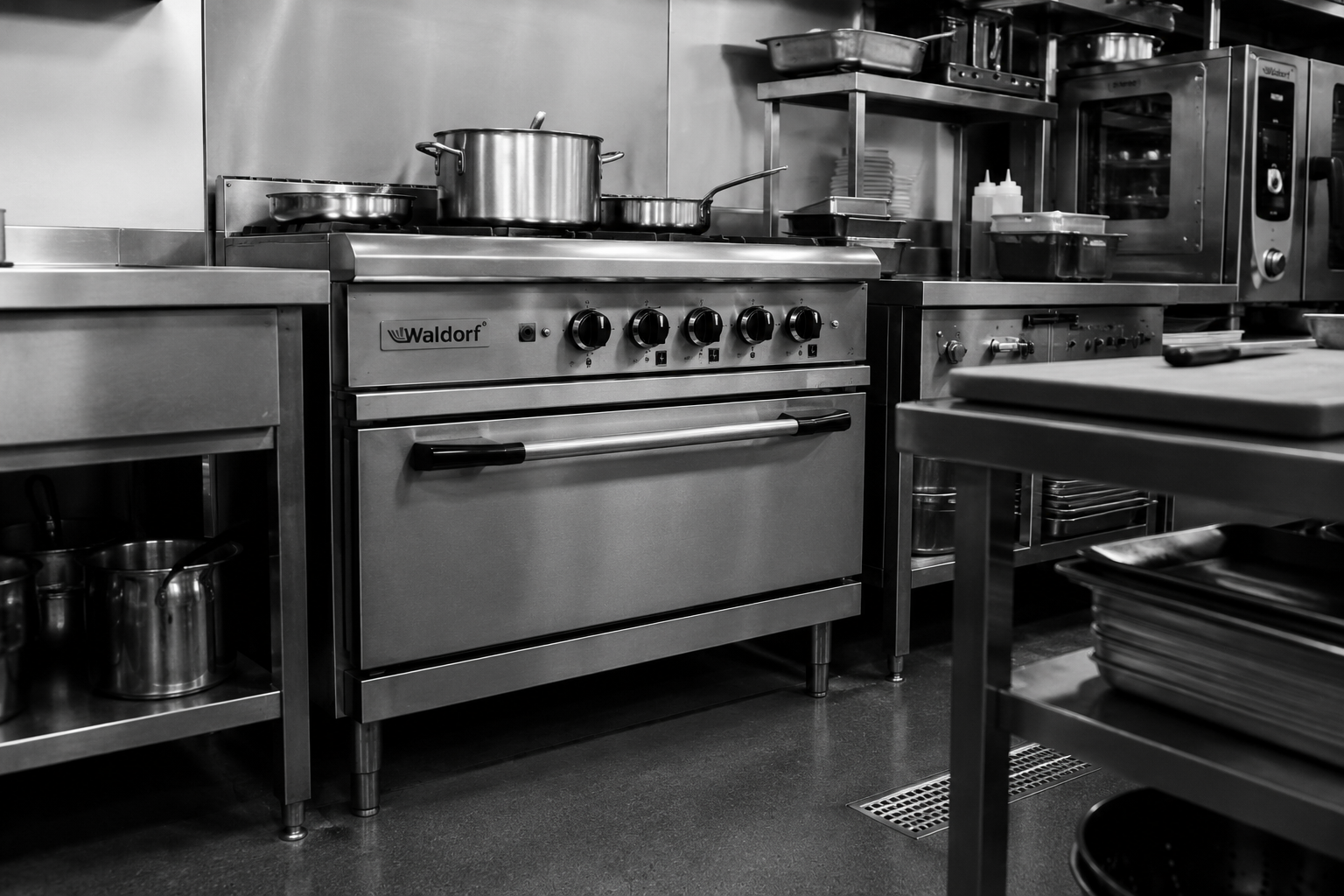
Waldorf – Modular commercial kitchen equipment designed for high-volume operations.
Anvil – Compact commercial ovens suited to cafés, takeaway shops and smaller kitchens.
Woodson, Roband and Roller Grill – Frequently used in cafés and quick-service food businesses.
We repair commercial convection ovens for:
Restaurants
Cafés
Hotels
Clubs
Pubs
Commercial kitchens
Hospitals
Schools
Universities
Aged care facilities
Caterers
Food production facilities
Commercial Convection Oven Repairs Across Sydney
Worldwide CDM provides commercial convection oven repairs throughout:
Sydney CBD
Parramatta
Hills District
Castle Hill
Blacktown
Inner West
North Sydney
Eastern Suburbs
Northern Beaches
Western Sydney
Sutherland Shire
Central Coast
Genuine Spare Parts
Where genuine spare parts are available, Worldwide CDM aims to use them to maintain the reliability and performance of your equipment.
If genuine parts are unavailable, suitable alternatives will be discussed before repairs are completed.
Our Repair Process
1. Contact Worldwide CDM
Tell us about the issue you're experiencing.
2. Book a Service
We'll arrange a technician to attend your business.
3. Fault Diagnosis
Our experienced technicians identify the cause of the problem.
4. Professional Repair
We carry out reliable repairs using quality replacement parts.
5. Testing
Your commercial dishwasher is fully tested before we leave to ensure it's operating correctly.
Preventative Maintenance for Commercial Convection Ovens
Regular servicing helps reduce unexpected breakdowns and extend the life of commercial catering equipment.
Preventative maintenance may include:
Inspecting heating elements
Testing thermostats
Checking temperature accuracy
Inspecting circulation fans
Cleaning ventilation systems
Checking electrical connections
Inspecting door seals
Testing safety controls
Identifying worn components before failure
Routine maintenance can also improve cooking consistency and reduce the likelihood of costly downtime during busy service periods.
Frequently Asked Questions
What is the difference between a commercial convection oven and a conventional oven?
A convection oven uses a circulation fan to distribute heated air evenly throughout the cooking chamber. This helps improve temperature consistency and cooking efficiency compared with a conventional oven that relies primarily on natural heat movement.
Why is my commercial convection oven cooking unevenly?
Common causes include reduced airflow, a faulty fan motor, damaged heating elements, worn door seals or temperature control issues. A professional inspection is the best way to identify the exact cause.
Why isn't my commercial convection oven heating?
Heating problems can result from failed heating elements, thermostat issues, electrical faults, safety cut-outs or control system failures. Diagnosis should be carried out by an experienced commercial equipment technician.
Do you repair all brands of commercial convection ovens?
We repair a wide range of commercial convection ovens from leading manufacturers commonly used in Sydney hospitality businesses. If you're unsure whether we service your equipment, contact us with the make and model.
How often should a commercial convection oven be serviced?
The appropriate servicing interval depends on usage, operating conditions and the manufacturer's recommendations. High-use commercial kitchens generally benefit from regular preventative maintenance to reduce unexpected breakdowns.
Request a Commercial Convection Oven Repair
If your commercial convection oven has stopped heating, is cooking unevenly or has developed an electrical or fan-related fault, Worldwide CDM is here to help.
Our experienced technicians provide professional commercial convection oven repairs across Sydney, backed by more than 30 years of commercial catering equipment experience.
Related Commercial Catering Equipment Repairs
Worldwide CDM also provides professional repairs for: