
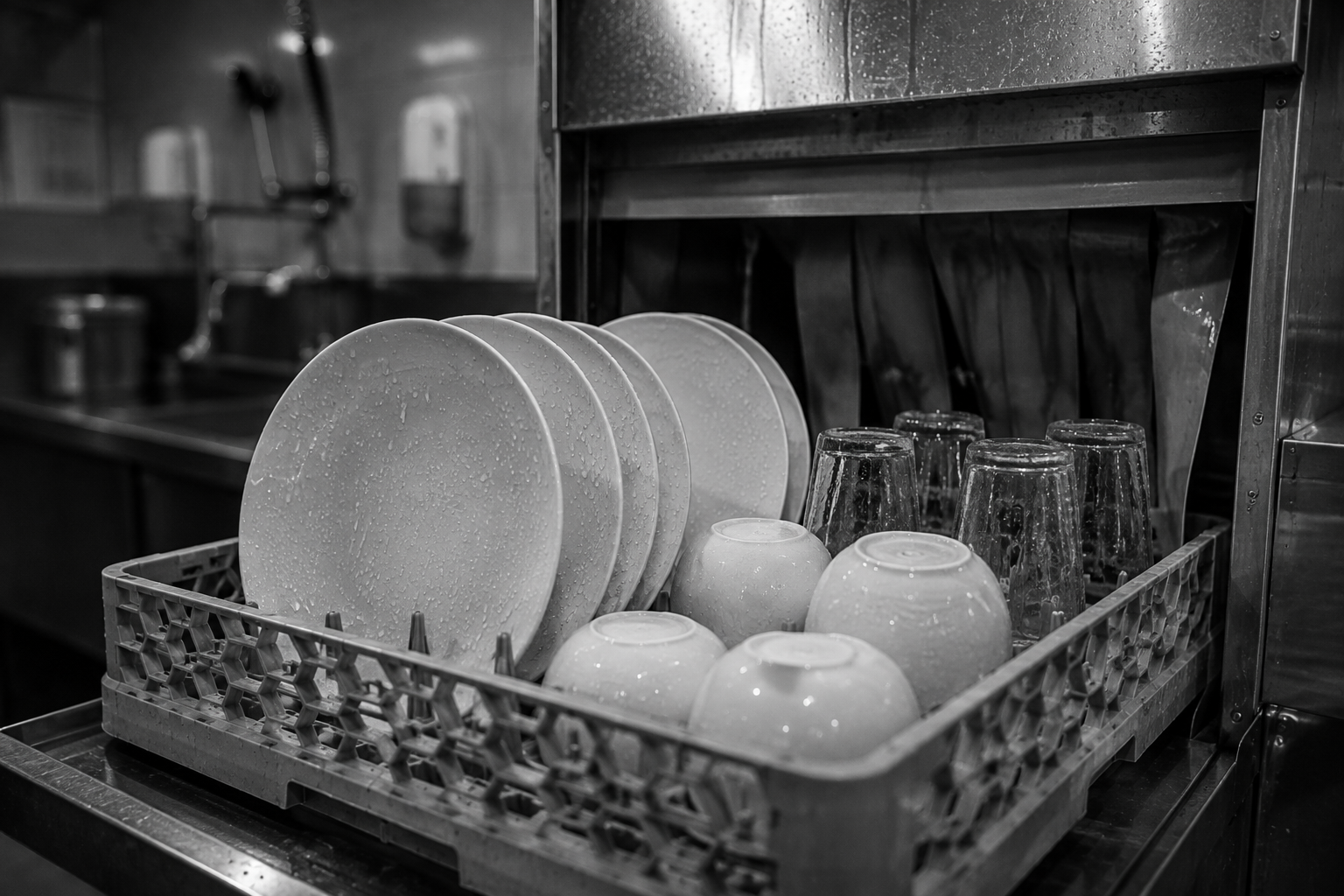
Commercial Dishwasher Not Drying Properly?
Stop Hand-Drying Dishes. Get Your Dishwasher Performing Properly Again.
Your commercial dishwasher completes its cycle, but the dishes come out excessively wet, covered in water droplets or taking much longer than usual to dry.
Now your staff are waiting for racks to dry, wiping dishes by hand or putting wet crockery back into service.
In a busy restaurant, café, club, hotel, hospital or commercial kitchen, that creates unnecessary work and can slow down your entire wash area.
Worldwide CDM provides professional commercial dishwasher repairs across Sydney, diagnosing rinse, heating, chemical and equipment faults that may contribute to poor drying performance.
Keep Serving Customers With Confidence.
Why Is My Commercial Dishwasher Not Drying Properly?
Poor drying doesn't automatically mean the dishwasher has one particular failed component.
Drying performance can be affected by several factors, including:
Rinse temperature
Rinse-aid dosing
Heating problems
Booster boiler faults
Rinse performance
Water conditions
Rack loading
Dish material
Machine settings or controls
Some commercial dishwasher systems also use dedicated drying equipment, while others rely primarily on the heat retained by the ware and appropriate rinse conditions.
The correct diagnosis therefore depends on the machine, its design and the symptoms you're experiencing.
1. Commercial Dishwasher Rinse Temperature Problems
The final rinse can play an important role in how dishes dry after leaving the machine.
If a dishwasher that previously produced satisfactory results suddenly leaves dishes noticeably wetter, the machine's operating temperatures should be considered as part of the diagnosis.
Depending on the dishwasher, temperature problems may involve:
Heating elements
Thermostats
Temperature sensors
Booster boiler components
Relays or contactors
Electrical controls
Water supply conditions
If your machine displays wash and rinse temperatures, note the readings when the problem occurs.
2. Commercial Dishwasher Booster Boiler Problems
On machines fitted with a booster or boiler system, a fault affecting heated rinse water can contribute to poor performance.
A booster problem doesn't necessarily mean the heating element itself has failed.
Depending on the equipment, a technician may need to investigate:
Heating elements
Thermostats
Temperature probes
Safety devices
Contactors
Relays
Wiring
Control systems
Replacing components without testing the system can result in unnecessary repairs.
Diagnose the cause first. Repair what actually needs repairing.
3. Rinse Aid Problems
Rinse aid helps water drain from the surfaces of dishes, glassware and utensils rather than remaining as droplets.
If the rinse-aid system isn't operating or dosing correctly, dishes may remain wetter and may also show:
Water spots
Streaking
Poor finishing
Droplets remaining on surfaces
Longer drying times
Possible causes can include an empty chemical container, dosing problem, chemical tubing issue, incorrect concentration or unsuitable setup.
Simply increasing the rinse aid isn't necessarily the solution.
4. Rinse Aid Dosing Pump Problems
If the dishwasher uses an automatic dosing system, the chemical container can be full while the correct amount of rinse aid still isn't reaching the machine.
Depending on the system, faults may involve:
Dosing pumps
Chemical tubing
Connections
Injectors
Controls
Incorrect adjustment
If poor drying appeared suddenly despite the same chemicals being used, the dosing system may need to be checked.
5. Commercial Dishwasher Not Rinsing Properly
Poor drying may actually be a symptom of a wider rinse problem.
If dishes aren't receiving the rinse conditions intended by the machine, you may notice a combination of:
Wet dishes
Water spots
Streaking
White residue
Chemical residue
Poor glassware finish
Uneven results across the rack
In these situations, the rinse system should be investigated rather than treating drying as an isolated problem.
6. Blocked or Restricted Rinse Jets
Rinse arms and jets distribute water throughout the rack.
If openings become restricted by debris, scale or mineral deposits, water distribution may become uneven.
One area of the rack may then perform differently from another.
Kitchen staff can inspect and clean operator-accessible rinse components according to the dishwasher's normal cleaning procedures.
If the rinse components are clean and poor performance continues, further diagnosis may be required.
7. Heating Element Problems
Heating elements are used within different parts of commercial warewashing systems depending on the machine's design.
A failed or underperforming heating circuit can affect operating temperatures and may contribute to other symptoms alongside poor drying.
You may also notice:
Longer heating times
Abnormal displayed temperatures
Machine not reaching temperature
Temperature-related error codes
Changes in wash or rinse performance
A heating element shouldn't be replaced based on wet dishes alone.
Electrical testing and diagnosis are required to establish whether the element or another part of the heating circuit is responsible.
8. Thermostat or Temperature Sensor Problems
Commercial dishwashers rely on temperature-control components to monitor and regulate heating.
Depending on the machine, a problem involving a thermostat, temperature sensor or associated control circuit can affect how the heating system operates.
This may result in:
Incorrect temperature readings
Failure to reach the intended temperature
Intermittent heating
Heating for too long
Temperature-related errors
Changes in drying performance
Because similar symptoms can be caused by different components, proper fault diagnosis is important.
9. Incorrect Rack Loading
Not every drying problem requires a technician.
The way dishes are positioned can affect how much water remains trapped after the cycle.
Items that collect water in recesses, lips or concave surfaces may naturally retain more water.
Avoid:
Overloading racks
Stacking items together
Positioning bowls so they collect water
Allowing items to overlap
Blocking normal water distribution
If correctly loaded racks dry substantially better than overloaded racks, machine failure may not be the primary issue.
10. Plastic Items Staying Wet
Plastic items often behave differently from ceramic, glass and metal during the drying process.
They generally retain less heat and can therefore remain noticeably wetter after a cycle.
If only plastic containers, trays or utensils remain wet while plates, glasses and metal items dry satisfactorily, that doesn't necessarily indicate a dishwasher fault.
The important question is whether drying performance has changed from what is normal for your machine and ware.
11. Water Pooling on Dishes
Sometimes the dishwasher is performing normally but water is physically trapped by the shape or position of an item.
This commonly occurs with:
Bowls
Cups
Containers
Recessed bases
Deep utensils
Items loaded at an unsuitable angle
Check whether the problem is widespread or limited to particular types of ware.
12. Scale and Mineral Build-Up
Mineral deposits can accumulate on water-contact components depending on water conditions and equipment maintenance.
Scale may affect components associated with:
Heating
Rinsing
Water flow
Temperature sensing
Booster systems
However, wet dishes alone don't prove that scale is responsible.
Descaling should be performed when appropriate for the equipment and condition of the machine — not simply because the dishes aren't drying.
Is the Dishwasher Actually Faulty?
This is an important distinction.
Everything Suddenly Comes Out Wet
If dishes that previously dried satisfactorily are now consistently wet, an equipment, temperature, rinse or chemical problem may need investigation.
Only Plastic Items Stay Wet
This may relate more to the physical properties of the ware than a machine fault.
Only Certain Items Hold Water
Check their shape and loading position.
Dishes Are Wet and Covered in Spots
Rinse performance, water conditions and rinse-aid dosing may need investigation.
Dishes Are Wet and the Rinse Temperature Is Abnormal
The heating, booster or temperature-control systems may require diagnosis.
One Area of the Rack Is Worse
Uneven rinse-water distribution or loading may need to be considered.
Has the Drying Performance Suddenly Changed?
A sudden change is useful diagnostic information.
Tell us if poor drying started after:
Changing detergent or rinse aid
Running out of rinse aid
A dishwasher error code
A heating problem
A change in displayed temperature
Recent repairs or maintenance
Changes to the water supply or treatment system
Changing the type of dishes being washed
Knowing when the problem started can help narrow down the cause.
What Can Kitchen Staff Check Before Calling a Technician?
1. Check the Rinse Aid
Make sure the rinse-aid container isn't empty and the correct product is connected.
2. Check Rack Loading
Make sure bowls, containers and other items aren't positioned so they collect water.
3. Check Which Items Are Wet
Determine whether the problem affects everything or mainly plastic items.
4. Check the Displayed Temperatures
If your dishwasher displays wash and rinse temperatures, record the readings.
5. Look for Error Codes
Photograph any error code before resetting the machine.
6. Inspect Operator-Accessible Rinse Arms
Check for obvious debris or deposits and clean operator-removable components according to the machine's normal cleaning procedure.
7. Look for Other Symptoms
Tell us if poor drying is happening alongside:
Poor rinsing
White residue
Cloudy glasses
Slow heating
Dirty dishes
or temperature problems.
Multiple symptoms can help identify the underlying fault.
Don't Keep Changing the Settings to Compensate
When dishes start coming out wet, it can be tempting to increase chemical dosing or alter temperature settings.
But if the dishwasher previously dried satisfactorily and has suddenly changed, the better question is:
What changed?
Random adjustments can mask the original problem or create another one.
If normal operator checks don't resolve the issue, the equipment should be properly diagnosed.
Commercial Dishwasher Drying Problems Sydney
Worldwide CDM provides professional commercial dishwasher fault diagnosis and repairs throughout Sydney.
Depending on the machine and fault, we can investigate problems involving:
Heating elements
Booster boilers
Thermostats
Temperature sensors
Rinse systems
Rinse arms and jets
Chemical dosing systems
Water inlet systems
Electrical controls
Scale-related equipment problems
Poor rinse performance
Temperature faults
A dishwasher completing its cycle doesn't necessarily mean every part of the machine is operating correctly.
Why Poor Drying Matters in a Commercial Kitchen
When dishes don't dry properly, your staff are left dealing with the problem.
That can mean:
Hand-drying dishes
Waiting longer between racks
Polishing glassware
Checking individual items
Dealing with water spots
Running unnecessary additional cycles
During a busy service, those extra steps add work exactly where your team doesn't need it.
Your dishwasher should help keep clean ware moving through the kitchen — not create another task for your staff.
Commercial Dishwasher Brands We Repair
Worldwide CDM repairs and services many leading commercial dishwasher brands, including:
Don't see your dishwasher brand listed?
Our experienced technicians repair many other commercial dishwasher makes and models used throughout Sydney.
How Worldwide CDM Diagnoses Poor Dishwasher Drying
You Keep Your Kitchen Moving. We'll Help Find the Problem.
1. Tell Us What's Happening
Provide the dishwasher's brand, model, symptoms and any error codes.
Tell us whether:
Everything stays wet
Only plastics stay wet
The rinse temperature has changed
Water spots are appearing
Rinsing has deteriorated
or the machine is taking longer to heat.
2. We Diagnose the Relevant Systems
Depending on the machine and symptoms, our technician may investigate the:
Heating system
Booster boiler
Rinse system
Rinse arms and jets
Temperature controls
Thermostats and sensors
Rinse-aid dosing system
Water supply
Electrical controls
and other relevant components.
3. We Explain What We've Found
We'll explain what's causing the problem and whether an equipment repair is actually required.
4. We Repair What's Required
Where a fault is identified, we'll repair or replace the relevant components using appropriate parts, including genuine manufacturer spare parts where available.
5. We Test the Machine
Following repair, the relevant functions are tested to check that the reported problem has been addressed.
Diagnose first. Repair what's required. Avoid unnecessary parts.
Why Choose Worldwide CDM?
Your Team Has Food to Prepare and Customers to Serve — Not Dishes to Hand-Dry.
When your commercial dishwasher stops performing the way it should, you need the cause identified properly.
Worldwide CDM provides:
✔ 30+ years supporting Sydney's hospitality industry
✔ Experienced commercial catering equipment technicians
✔ Commercial dishwasher fault diagnosis and repairs
✔ Repairs for leading commercial dishwasher brands
✔ Genuine spare parts
✔ Preventative maintenance programs
✔ Reliable workmanship
✔ Straightforward, honest advice
✔ Service throughout Sydney
Keep Serving Customers With Confidence.
Frequently Asked Questions
Why is my commercial dishwasher not drying dishes properly?
Possible causes include poor rinse performance, incorrect rinse-aid dosing, temperature problems, booster boiler faults, heating-system problems or loading conditions. Some types of ware, particularly plastics, may also naturally retain more water.
Why are my dishes suddenly coming out wet?
If dishes previously dried satisfactorily and have suddenly started coming out wetter, check for other changes such as rinse-aid problems, abnormal temperatures, rinse-performance issues or error codes.
Can rinse aid affect commercial dishwasher drying?
Yes. Rinse aid assists water in draining from the surfaces of ware and can influence drying and finishing. Incorrect dosing or a dosing-system problem can contribute to poor results.
Why do plastic dishes stay wet?
Plastic generally retains less heat than materials such as ceramic, glass and metal, so plastic items can remain wetter after the cycle even when other items dry satisfactorily.
Can a booster boiler problem cause poor drying?
A booster or rinse-heating problem can affect rinse conditions on machines that use these systems. If poor drying occurs alongside abnormal rinse temperatures, the heating system may need investigation.
Can a faulty heating element cause wet dishes?
A heating fault can affect operating temperatures and may contribute to poor results, but wet dishes alone don't prove the element has failed. The heating circuit should be tested before replacing components.
Why are my dishes wet and covered in water spots?
This combination can indicate that rinse performance, rinse-aid dosing, water conditions or related systems need to be checked.
Should I increase the rinse aid if dishes aren't drying?
Not automatically. Incorrect chemical concentration can create its own problems. If drying performance has suddenly changed, determine the cause before repeatedly changing the dosing.
Do you repair commercial dishwashers that aren't drying properly in Sydney?
Yes. Worldwide CDM diagnoses and repairs commercial dishwasher heating, rinse, booster, temperature-control and related equipment faults across Sydney on the commercial dishwasher brands we service.
Commercial Dishwasher Not Drying Properly?
Stop Hand-Drying Dishes and Get Your Wash Area Moving Again.
Your staff shouldn't have to compensate for a commercial dishwasher that is no longer producing the results your kitchen expects.
Tell Worldwide CDM what's happening.
We'll diagnose the equipment problem, explain what we've found and recommend the appropriate repair.
Keep Serving Customers With Confidence.
Related Commercial Catering Equipment Repairs
Worldwide CDM also provides professional repairs for: