
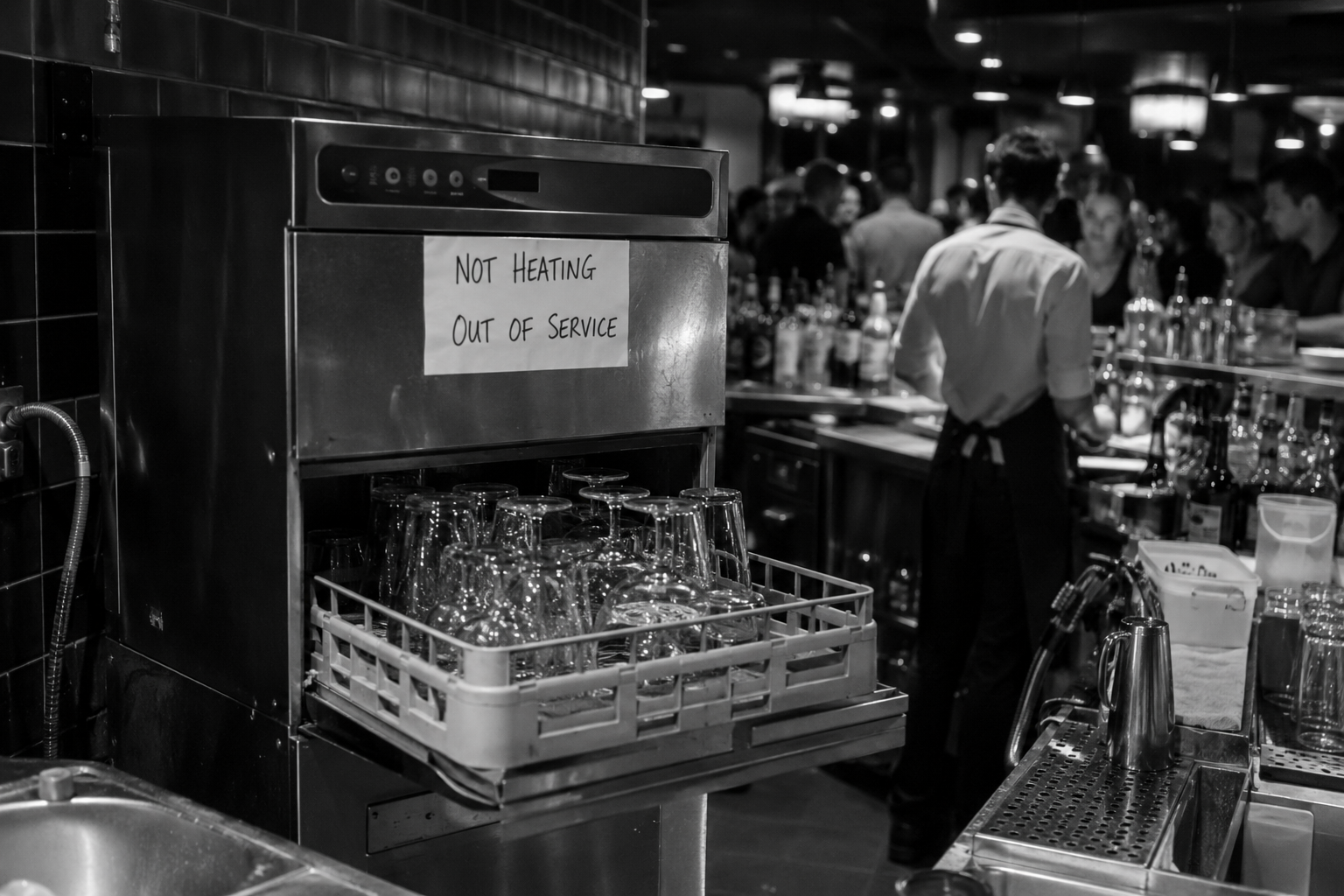
Commercial Glasswasher Not Heating
Commercial Glasswasher Not Heating?
Get Your Glasswasher Back to Temperature and Your Service Moving Again
When your bar, restaurant or hotel is busy, you need clean glassware ready for the next customer.
If your commercial glasswasher stops heating, takes too long to reach temperature or isn't maintaining its normal operating conditions, glasswashing can quickly become a bottleneck.
Worldwide CDM provides commercial glasswasher repairs across Sydney, diagnosing heating faults and identifying what's actually causing the problem before recommending the repair.
When Equipment Stops, Your Kitchen Doesn't Have To.
Why Is My Commercial Glasswasher Not Heating?
A commercial glasswasher that isn't heating properly doesn't automatically need a new heating element.
Depending on the glasswasher brand, model and symptoms, possible causes can include:
Heating element problems
Thermostat faults
Temperature sensor problems
Booster or boiler faults
Contactors or relays
Electrical connections
Water-level problems
Control-system faults
Scale accumulation
Water-supply problems
Safety devices
Other machine-specific faults
Several different problems can produce very similar symptoms.
That's why replacing the most obvious component isn't always the answer.
We Find the Fault Before We Sell the Fix.
Signs Your Commercial Glasswasher Has a Heating Problem
A glasswasher doesn't need to be completely cold to have a heating fault.
You may notice:
Glasswasher not heating at all
Wash water not reaching its normal temperature
Rinse water not reaching its normal temperature
Glasswasher taking longer than usual to heat
Slow temperature recovery between cycles
Temperature fluctuating
Intermittent heating
Machine running despite abnormal temperatures
Temperature-related fault or error messages
Glasswashing performance changing unexpectedly
If the machine's performance has changed, it's worth finding out why.
Commercial Glasswasher Heating Element Problems
A failed or deteriorating heating element is one possible cause of a commercial glasswasher not heating.
Depending on the machine, heating elements may be responsible for heating the wash tank, rinse water or associated heating systems.
Possible symptoms can include:
No heat
Slow heating
Failure to reach operating temperature
Intermittent heating
Electrical faults
However, an element shouldn't automatically be replaced simply because the machine isn't heating.
The element may still be functional while another part of the heating circuit is preventing it from operating correctly.
Test First. Replace Second.
Commercial Glasswasher Thermostat Problems
Thermostats help regulate temperature within commercial glasswasher systems.
A thermostat fault may contribute to:
Glasswasher not heating
Incorrect temperatures
Heating stopping too early
Intermittent heating
Abnormal temperature control
The thermostat is only one part of the heating system.
Correct diagnosis should establish whether the thermostat itself has failed or whether another component is responsible.
Commercial Glasswasher Temperature Sensor Problems
Many modern commercial glasswashers use electronic temperature sensors as part of their control systems.
These sensors provide temperature information that allows the machine to control heating and monitor operating conditions.
A sensor or associated circuit problem may contribute to:
Incorrect temperature readings
Failure to heat correctly
Intermittent heating
Unexpected cycle behaviour
Temperature-related error codes
Heating stopping prematurely
The correct testing procedure depends on the particular glasswasher.
Commercial Glasswasher Booster or Boiler Problems
Some commercial glasswashers use a booster or boiler system associated with rinse-water heating.
A problem within this system may mean the wash tank appears to heat normally while the rinse system doesn't reach its intended operating conditions.
Possible areas requiring investigation can include:
Booster heating elements
Thermostats
Temperature sensors
Contactors
Relays
Water level
Scale accumulation
Electrical supply
Control components
Identifying whether the problem affects the wash temperature, rinse temperature or both can help narrow down the fault.
Commercial Glasswasher Contactor and Relay Problems
Heating elements rely on other electrical components to control when power is supplied.
Depending on the glasswasher, this can include contactors and relays.
A heating element may be perfectly functional but still fail to heat if the component responsible for switching or controlling it has developed a fault.
Problems may involve:
Worn electrical contacts
Failed coils
Relays
Loose or damaged connections
Wiring
Control signals
Associated electrical components
The failed component isn't always the most obvious one.
Commercial Glasswasher Control Problems
Modern commercial glasswashers can use electronic controls to manage functions including:
Heating
Filling
Draining
Wash cycles
Rinsing
Chemical dosing
Temperature monitoring
A control fault can potentially affect heating operation.
However, electronic control components can be expensive and shouldn't automatically be replaced simply because the glasswasher has an electrical problem.
Other relevant components should be properly assessed first.
Can Low Water Level Affect Glasswasher Heating?
Depending on the machine's design, correct water level can be important to normal heating operation.
If the glasswasher isn't filling correctly or isn't detecting the expected water level, the heating system may not operate as intended.
Possible causes can involve:
Water inlet valves
Water-level sensors
Pressure systems
Float systems
Water supply
Filters or strainers
Control components
What initially appears to be a heating problem can therefore sometimes begin with a filling or water-level fault.
Commercial Glasswasher Taking Too Long to Heat
A glasswasher doesn't need to stop heating completely before there is a problem.
One of the first things staff may notice is that the machine is simply taking much longer to become ready.
Possible causes can include:
Heating element problems
Scale accumulation
Thermostat faults
Temperature sensor problems
Electrical issues
Booster problems
Water-supply conditions
Control faults
A noticeable increase in heating or recovery time shouldn't simply be accepted as normal ageing.
Commercial Glasswasher Not Heating Rinse Water
If the glasswasher wash tank is hot but the rinse water isn't reaching its normal temperature, the problem may be associated specifically with the rinse-heating system.
Depending on the machine, this can involve:
Booster or boiler heating
Rinse heating elements
Thermostats
Temperature sensors
Water level
Contactors
Relays
Controls
Scale
Tell us whether the problem appears to affect the wash water, rinse water or both.
This provides useful information when diagnosing the machine.
Commercial Glasswasher Heats Intermittently
Intermittent heating faults can be particularly disruptive because the machine may work normally at one time and fail later during a busy service.
Possible causes can involve:
Electrical connections
Contactors
Relays
Temperature sensors
Thermostats
Controls
Safety components
Other electrical faults
If possible, note when the problem occurs and whether it changes after the machine has been operating for some time.
Can Scale Cause a Commercial Glasswasher Heating Problem?
Mineral scale can accumulate on heating surfaces where water conditions allow it.
Significant scale can act as an insulating layer and reduce efficient heat transfer between the heating surface and the surrounding water.
This may contribute to:
Slower heating
Longer recovery times
Reduced heating performance
Additional stress on heating systems
But simply removing the scale doesn't necessarily solve the underlying problem.
If heavy scale keeps returning, the water conditions or water-treatment system may also require investigation.
Commercial Glasswasher Water Softener Problems
Where a glasswasher uses an integrated or external water softener, correct softener operation can help reduce hardness minerals reaching the machine.
Depending on the system, softener performance may rely on:
Salt
Ion-exchange resin
Correct regeneration
Valves
Water flow
Controls
Correct settings
If the softener isn't operating correctly, increased scale may begin developing within the glasswasher.
If you're experiencing heating problems together with increasing scale, both symptoms should be investigated.
Poor Glass Results Don't Always Mean the Machine Isn't Heating
If glasses aren't coming out as expected, temperature is only one possible cause.
Poor results can also involve:
Water hardness
Detergent dosing
Rinse-aid dosing
Wash performance
Rinse performance
Blocked wash or rinse jets
Water supply
Scale
Incorrect loading
Glass condition
This is particularly important with cloudy or marked glassware.
Replacing a heating component won't solve a chemical or water-quality problem.
Cloudy Glasses and Heating Problems
Cloudy glasses can sometimes occur alongside a glasswasher performance problem, but cloudiness doesn't automatically indicate a heating fault.
Possible causes can include:
Mineral deposits
Hard water
Chemical dosing
Rinse-aid problems
Rinse performance
Temperature
Scale
Glass etching or wear
The appearance of the glass is a symptom.
The underlying cause still needs to be established.
What Can Staff Check Before Booking a Service?
Before arranging a technician, staff can make several useful observations without dismantling the glasswasher.
Check the Temperature Display
Note the wash and rinse temperatures shown by the machine where applicable.
Check for Error Codes
Photograph any error or fault message before resetting the glasswasher.
Check Whether the Machine Is Filling
Tell us whether water is entering normally.
Note When the Problem Started
Was the change sudden or gradual?
Look for Visible Scale
Heavy mineral deposits may be relevant to heating performance.
Check Chemical Levels
Poor glass results can sometimes be mistaken for heating problems.
Find the Brand and Model
Providing the glasswasher brand and model helps identify the equipment being serviced.
Don't Attempt Internal Electrical Repairs
Commercial glasswashers combine electricity, water, chemicals and high temperatures.
Staff should not attempt to dismantle electrical systems, bypass safety components or perform live electrical testing unless appropriately qualified and authorised.
Avoid:
Opening electrical panels
Bypassing safety devices
Bridging switches
Testing live circuits
Replacing electrical components without diagnosis
Repeatedly resetting a machine that continues to fault
If normal operator checks don't resolve the problem, arrange professional diagnosis.
Should You Repair or Replace a Glasswasher That Isn't Heating?
A heating problem doesn't automatically mean the glasswasher needs replacing.
Whether repair or replacement makes more sense can depend on:
Age of the glasswasher
Overall condition
Cost of repair
Previous breakdown history
Spare-parts availability
Reliability
Scale or corrosion
Other developing faults
Replacement cost
Worldwide CDM provides both commercial glasswasher repairs and equipment sales, allowing the condition of the existing machine to be considered before replacement is recommended.
Repair when repair makes sense. Replace when replacement makes sense.
Why Proper Diagnosis Matters
Consider a glasswasher that isn't heating.
The heating element is replaced.
The machine still doesn't heat.
Then another component is replaced.
The problem remains.
Eventually, the original fault is discovered elsewhere in the heating or control system.
Correct diagnosis helps avoid this type of unnecessary parts replacement.
That's why our approach is simple:
We Find the Fault Before We Sell the Fix.
How Worldwide CDM Diagnoses Commercial Glasswasher Heating Problems
1. Tell Us What's Happening
Provide the glasswasher brand, model and symptoms.
Tell us whether the machine:
Doesn't heat at all
Heats slowly
Has incorrect wash temperature
Has incorrect rinse temperature
Heats intermittently
Displays a fault
2. We Assess the Relevant Systems
Depending on the equipment and symptoms, diagnosis may involve:
Heating elements
Thermostats
Temperature sensors
Booster systems
Contactors
Relays
Water-level systems
Electrical components
Controls
Scale conditions
3. We Identify the Cause
We work to determine what's actually causing the heating problem rather than assuming which component needs replacement.
4. We Explain What We've Found
You'll know what the problem is and what work is recommended.
5. We Repair What's Required
Where repair is appropriate, we address the relevant fault and work to restore normal glasswasher operation.
Diagnose Properly. Repair What's Required. Keep Service Moving.
Commercial Glasswasher Repairs Sydney
Worldwide CDM provides commercial glasswasher repairs and servicing across Sydney for:
Restaurants
Bars
Pubs
Clubs
Hotels
Cafés
Function venues
Catering businesses
Commercial kitchens
Whether your glasswasher has stopped heating completely or simply isn't reaching temperature the way it used to, the first step is determining why.
Commercial Glasswasher Brands We Repair
Worldwide CDM repairs and services many leading commercial glasswasher brands, including:
Don't see your dishwasher brand listed?
Our experienced technicians repair many other commercial dishwasher makes and models used throughout Sydney.
Why Choose Worldwide CDM?
30+ Years Helping Sydney Hospitality Businesses Keep Moving
Founded by Robert and now operated alongside his son Joel, Worldwide CDM is a family-run commercial catering equipment business built on technical experience, straightforward advice and long-term customer relationships.
We provide:
30+ Years Experience
Family-Owned Service
Commercial Catering Equipment Specialists
Commercial Glasswasher Fault Diagnosis
Genuine Spare Parts
Routine Servicing
Preventative Maintenance
Equipment Sales
Sydney-Wide Service
Honest Advice
Our goal isn't to replace the greatest number of parts.
It's to determine what the equipment actually needs.
We Find the Fault Before We Sell the Fix.
Keep Serving Customers With Confidence.
Click Here To Book A Service
Click Here To Call Us
Frequently Asked Questions
Why is my commercial glasswasher not heating?
Possible causes include heating elements, thermostats, temperature sensors, booster components, contactors, relays, water-level problems, electrical faults and control-system issues. Diagnosis is required to determine the actual cause.
Does a glasswasher not heating mean the heating element has failed?
No. A failed element is one possibility, but another electrical, temperature-control or water-level component may be preventing a functional element from heating.
Why is my commercial glasswasher taking so long to heat?
Slow heating can involve heating-element problems, scale accumulation, thermostats, temperature sensors, booster systems, electrical faults or other operating conditions.
Why is my glasswasher wash water hot but the rinse water isn't?
Some glasswashers have different systems associated with wash and rinse heating. A fault affecting the rinse-heating system may therefore occur while the wash tank continues heating.
Can scale make a commercial glasswasher heat slowly?
Yes. Significant mineral deposits on heating surfaces can reduce efficient heat transfer. Recurring scale should also prompt investigation of water hardness and water-treatment systems.
Can a thermostat stop a commercial glasswasher heating?
Depending on the machine, a thermostat or temperature-control fault can affect heating operation. The component should be tested rather than replaced based only on the symptom.
Why does my glasswasher heat sometimes but not others?
Intermittent heating can involve electrical connections, contactors, relays, sensors, thermostats, controls or other faults.
Do cloudy glasses mean my glasswasher isn't hot enough?
Not necessarily. Cloudy glasses can also result from mineral deposits, water hardness, chemical dosing, rinse performance or permanent glass damage.
Should I replace an old glasswasher that isn't heating?
Not automatically. The age, condition, repair cost, parts availability, reliability and replacement cost should all be considered.
Do you repair commercial glasswashers across Sydney?
Yes. Worldwide CDM provides commercial glasswasher fault diagnosis, repairs and servicing for hospitality businesses and commercial kitchens across Sydney.
Commercial Glasswasher Not Heating?
Don't Guess Which Part Has Failed.
When clean glassware needs to keep moving, trial-and-error repairs can mean more downtime and unnecessary expense.
Worldwide CDM combines more than 30 years of commercial catering equipment experience with practical fault diagnosis and straightforward advice.
We'll work to identify what's causing the heating problem and recommend the repair the equipment actually requires.
When Equipment Stops, Your Kitchen Doesn't Have To.
Keep Serving Customers With Confidence.
Related Commercial Catering Equipment Repairs
Worldwide CDM also provides professional repairs for: