
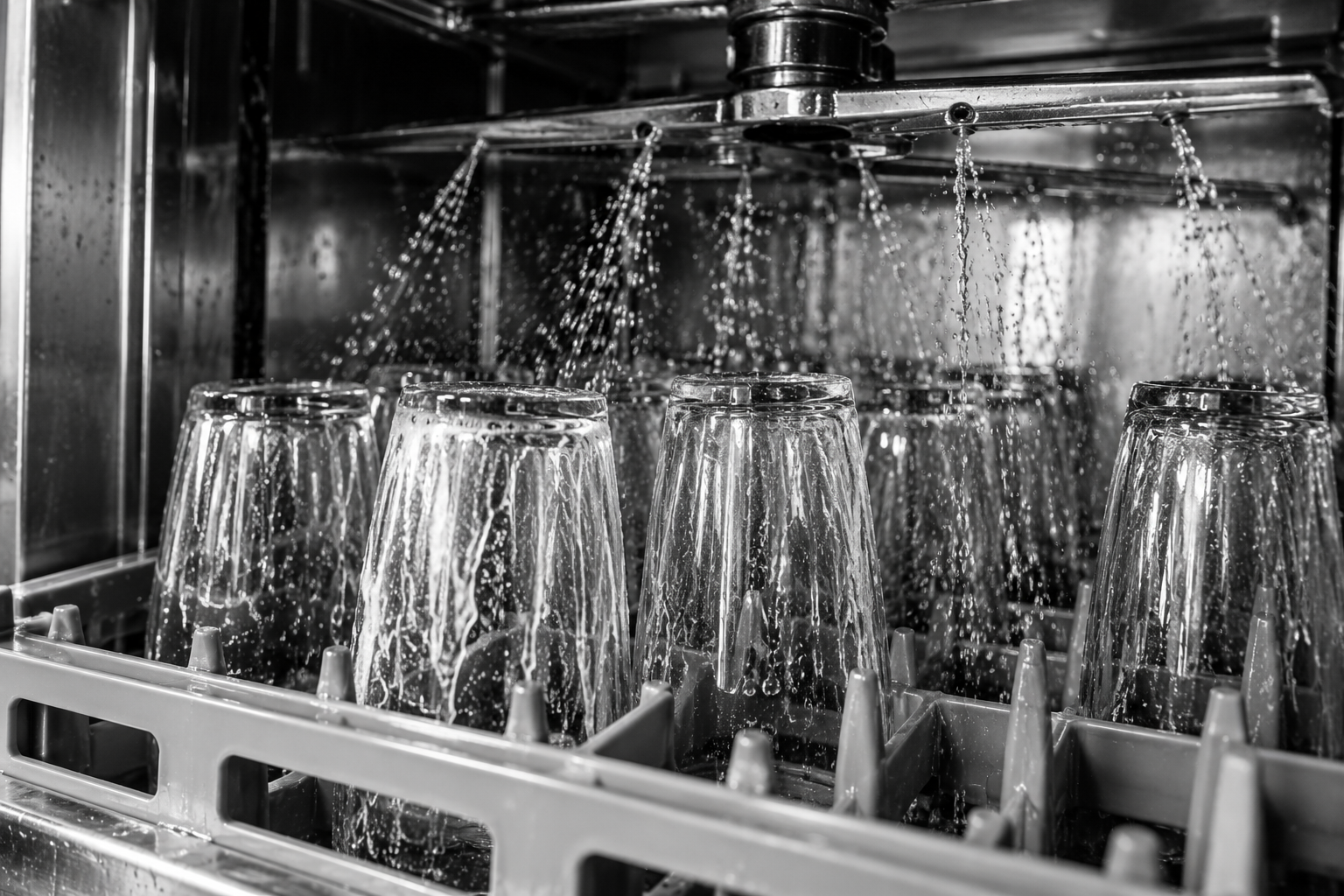
Commercial Glasswasher Not Rinsing Properly
Glasses Washed but Still Coming Out With Residue?
Your commercial glasswasher completes its cycle, but the glasses coming out still have detergent residue, spots, streaks, film or visible marks.
The machine may appear to be operating normally. Water enters, the cycle runs and the glasswasher drains. But if the final rinse isn't performing as it should, the finished glassware may still not be ready to serve.
For a busy bar, restaurant, pub, club or hotel, poor rinsing can quickly create extra work. Staff may need to rewash or hand polish glasses, clean glassware can run short and service can slow down.
Worldwide CDM provides commercial glasswasher repairs and servicing across Sydney, diagnosing rinse problems to determine what is actually affecting the machine's performance.
We Find the Fault Before We Sell the Fix.
When Equipment Stops, Your Kitchen Doesn't Have To.
Why Is My Commercial Glasswasher Not Rinsing Properly?
Poor rinsing can have several possible causes.
Depending on the machine and symptoms, possible causes can include:
Blocked rinse jets
Restricted rinse arms
Scale build-up
Low water pressure
Water-supply problems
Rinse pump problems
Rinse valve faults
Booster problems
Incorrect rinse temperature
Water inlet restrictions
Chemical dosing problems
Water-softener problems
Control faults
Incorrect loading
Other machine-specific issues
The important thing is not to assume that poor rinsing automatically means one particular component has failed.
The result you see on the glass is the symptom.
The next step is finding the cause.
Diagnose First. Repair What’s Required.
What Does the Rinse Cycle Do?
Commercial glasswashers generally use separate stages to wash and rinse glassware.
The wash stage removes contamination using water, detergent and mechanical wash action.
The final rinse helps remove remaining wash solution and prepares the glassware to leave the machine.
If the rinse stage isn't performing correctly, glasses may leave the machine with:
Detergent residue
Food or beverage residue
White spots
Streaks
Cloudiness
Film
Poor drying
Uneven results
This means a glasswasher can appear to complete a normal cycle while still producing unacceptable glassware.
Blocked Commercial Glasswasher Rinse Jets
Rinse jets contain small openings designed to distribute water across the rack.
These openings can become restricted by:
Scale
Mineral deposits
Debris
Foreign material
Even a partial restriction can change the rinse pattern.
Some glasses may receive adequate coverage while others receive less.
Staff may notice that one section of a rack consistently produces worse results than another.
Operator-removable rinse components should be cleaned according to the manufacturer's instructions.
If rinse jets continue becoming restricted, the reason behind the build-up should also be investigated.
Cleaning the Blockage Is One Thing. Understanding Why It Keeps Returning Is Another.
Commercial Glasswasher Rinse Arm Problems
The rinse arms need to distribute water effectively throughout the machine.
Problems can potentially involve:
Blocked jets
Restricted movement
Scale
Debris
Damaged components
Incorrect assembly
Water-flow problems
If a rinse arm isn't operating correctly, coverage across the rack may become uneven.
This can explain why some glasses come out clear while others in the same cycle remain marked.
Commercial Glasswasher Low Rinse Pressure
Poor rinse performance may also be related to inadequate water pressure or flow.
Depending on the glasswasher, possible causes can involve:
Incoming water pressure
Restricted water supply
Inlet filters
Valves
Scale
Water pathways
Pumps
Other rinse-system components
Low rinse pressure may produce a spray pattern that looks weaker than normal or doesn't adequately reach the entire rack.
The cause may be within the glasswasher or elsewhere in the incoming water supply.
Commercial Glasswasher Water Supply Problems
A glasswasher can only rinse effectively if it receives the water required for the process.
Possible supply-related issues can include:
Low incoming water pressure
Restricted pipework
Partially closed isolation valves
Blocked inlet filters
Water-supply interruptions
Other site plumbing problems
This is why diagnosis shouldn't begin by automatically replacing components inside the machine.
Sometimes the problem originates before the water even reaches the glasswasher.
Commercial Glasswasher Rinse Valve Problems
Depending on the machine, valves are used to control water flow during different stages of operation.
A rinse-related valve problem may contribute to:
Weak rinsing
No rinse water
Intermittent rinsing
Incorrect water flow
Incomplete rinse cycles
However, a valve that isn't operating doesn't necessarily mean the valve itself has failed.
The problem could involve its electrical supply, wiring, control signal or another system that determines when the valve operates.
Don’t Replace a Valve Until You Know the Valve Is the Problem.
Commercial Glasswasher Rinse Pump Problems
Some commercial glasswasher systems use pumps as part of the rinse process.
Where applicable, pump-related faults may involve:
Motor problems
Impeller problems
Blockages
Electrical faults
Wiring
Internal wear
Control problems
Symptoms can include weak rinse performance, unusual noises or changes in water delivery.
The pump should be assessed as part of the complete rinse system rather than replaced based on symptoms alone.
Commercial Glasswasher Booster Problems
Depending on the glasswasher configuration, a booster system may be used to provide water at the required rinse conditions.
A booster problem can potentially involve:
Heating elements
Thermostats
Temperature sensors
Water level
Scale
Electrical components
Controls
A machine experiencing a booster problem may still wash while failing to achieve its intended rinse conditions.
Correct diagnosis is important because the visible symptom may appear to be a rinse problem even though the underlying fault is within another system.
Commercial Glasswasher Rinse Temperature Problems
Temperature forms part of the overall glasswashing process.
If rinse water isn't reaching the intended operating conditions, the cause may involve:
Heating elements
Thermostats
Temperature sensors
Booster systems
Contactors
Relays
Controls
Scale accumulation
Temperature should be tested and assessed rather than assumed from how the glassware looks.
White marks, streaks or cloudiness can have several causes unrelated to temperature.
Scale Build-Up and Poor Rinsing
Scale can develop where hardness minerals accumulate within equipment.
In a commercial glasswasher, scale may form around:
Rinse jets
Rinse arms
Heating components
Booster systems
Water pathways
Valves
Tank surfaces
When scale restricts small rinse openings or water pathways, water distribution can be affected.
Removing the visible scale may improve performance, but if it quickly returns, the underlying water conditions should also be considered.
Treating the Scale Without Considering Why It Formed Can Mean Treating the Same Problem Again.
Commercial Glasswasher Water Softener Problems
Where a water softener is installed, poor water treatment can contribute to increased mineral accumulation.
Depending on the system, problems may involve:
Salt
Regeneration
Resin
Valves
Water flow
Controls
Incorrect settings
A water-softener problem may therefore contribute indirectly to poor rinsing by allowing scale to develop within rinse components and water pathways.
If rinse jets repeatedly become scaled, investigating the water treatment can be just as important as cleaning the jets.
Commercial Glasswasher Chemical Dosing Problems
Not every apparent rinse problem is caused by the rinse system.
Incorrect detergent or rinse-aid dosing can leave glassware looking as though it hasn't been rinsed correctly.
Possible dosing problems include:
Too much detergent
Too little detergent
Incorrect rinse-aid dosing
Blocked chemical lines
Damaged tubing
Dosing pump problems
Empty chemical containers
Incorrect settings
Recent chemical changes
If the glasswasher's mechanical operation appears normal but glassware suddenly begins showing residue, chemical dosing should also be considered.
Too Much Detergent and Poor Rinsing
Increasing detergent isn't always the answer to poor glasswashing results.
If too much detergent is entering the machine, the rinse stage may have more chemical residue to remove.
The finished glassware may show:
Film
Streaks
Residue
Cloudiness
Unusual appearance
Chemical concentration should be appropriate for the product, machine, water conditions and operating requirements.
More Chemical Doesn’t Automatically Mean Cleaner Glasses.
Rinse Aid and Glasswasher Rinse Performance
Rinse aid assists the final stages of the glasswashing process.
Incorrect dosing can contribute to:
Water spots
Streaking
Film
Poor drying
Uneven appearance
If the venue has recently changed rinse aid or adjusted the dosing system, that change may be relevant.
Randomly increasing or decreasing rinse aid can make diagnosis more difficult.
Glasswasher Not Rinsing Detergent Off Glasses
If detergent residue remains after the cycle, several areas may need to be considered.
Possible factors include:
Excessive detergent dosing
Insufficient rinse water
Restricted rinse jets
Poor water pressure
Rinse-system faults
Incorrect cycle conditions
Water-supply problems
The solution depends on whether too much chemical is entering the machine, too little rinse water is reaching the glasses or another part of the process isn't working correctly.
Why Are Only Some Glasses Not Being Rinsed Properly?
Uneven results can provide an important clue.
If one part of the rack consistently produces poor results while another part is clear, possible causes may include:
Blocked rinse jets
Uneven spray coverage
Rinse arm problems
Loading
Rack position
Damaged components
If every glass is affected equally, a broader water, chemical or rinse-system problem may become more relevant.
The pattern matters.
Why Is One Side of the Glasswasher Rinsing Better Than the Other?
If glassware on one side of the rack consistently comes out cleaner than the other, the rinse distribution should be considered.
Possible causes can include restricted jets, rinse-arm problems, scale, debris or another issue affecting spray coverage.
This is useful information to provide when booking a service because it helps narrow down the areas requiring investigation.
Commercial Glasswasher Rinsing Intermittently
Some rinse faults may not occur during every cycle.
The glasswasher may work correctly for several cycles and then produce a poor result.
Intermittent problems can potentially involve:
Valves
Pumps
Electrical connections
Sensors
Controls
Water pressure
Water supply
Scale or restrictions
A machine that works after being reset hasn't necessarily been repaired.
If the problem continues returning, the underlying cause should be investigated.
Commercial Glasswasher Not Rinsing After the Wash Cycle
If the wash stage appears to complete but the final rinse doesn't occur normally, the fault may be associated specifically with the transition into the rinse stage.
Depending on the machine, possible areas may include:
Controls
Valves
Pumps
Sensors
Water supply
Electrical components
Booster system
Cycle sequencing
Knowing which stages of the cycle are operating correctly can help narrow down the fault.
Poor Rinsing and Cloudy Glasses
Cloudy glasses can be one sign of poor rinse performance, but cloudiness doesn't automatically mean the rinse system has failed.
Cloudiness may also involve:
Hard water
Mineral deposits
Detergent dosing
Rinse aid
Scale
Water treatment
Permanent glass etching
The appearance of the glass alone isn't enough to determine the cause.
Poor Rinsing and White Marks on Glasses
White marks can also appear when glassware isn't being rinsed effectively.
However, white spots and chalky residue can also be associated with hard water and mineral deposits.
If white marks appear only after glasses dry, water quality and mineral content may be particularly relevant.
If residue is visible immediately after the cycle, chemical dosing and rinse performance may also need investigation.
Poor Rinsing and Glasses Not Drying Properly
Rinsing and drying performance can be related.
If the final rinse or rinse-aid system isn't functioning correctly, glasses may leave the machine with excessive water remaining on their surfaces.
Possible factors include:
Rinse-aid dosing
Rinse temperature
Water quality
Rinse coverage
Chemical balance
The exact cause should be identified rather than assuming the machine simply needs more rinse aid.
Could Incorrect Loading Cause Poor Rinsing?
Yes.
Even a correctly functioning glasswasher may produce poor results if glassware prevents water from reaching all surfaces effectively.
Possible issues include:
Overloading racks
Glasses positioned incorrectly
Glassware touching or overlapping
Incorrect rack type
Items obstructing spray patterns
If the problem occurs only with heavily loaded racks, loading practices should be considered before assuming a component has failed.
What Can Staff Check Before Booking a Service?
Check the Rinse Arms and Jets
Clean operator-removable rinse components according to the manufacturer's instructions.
Look for Scale
Check accessible rinse components and internal surfaces for white or chalky mineral deposits.
Check Chemical Levels
Confirm detergent and rinse aid are available and being supplied normally.
Check the Water Supply
Confirm the normal water supply is available and the operator-accessible isolation valve hasn't been closed.
Check the Rack Loading
Make sure glassware isn't overloaded or positioned in a way that prevents water reaching the surfaces.
Watch for a Pattern
Does poor rinsing affect every glass or only one section of the rack?
Note the Temperature Display
Record displayed wash and rinse temperatures where applicable.
Check for Error Codes
Photograph any error message before resetting the machine.
Find the Brand and Model
Providing the glasswasher details helps identify the particular rinse system being used.
Don’t Start Replacing Parts Based on the Symptom
Poor rinsing can involve water supply, pressure, rinse arms, valves, pumps, scale, heating, chemicals or controls.
Several different faults can therefore produce similar symptoms.
Replacing the first component that appears related to rinsing can become expensive if it wasn't responsible for the problem.
The better approach is to assess the system, identify the cause and repair what actually requires attention.
Test First. Replace Second.
How Worldwide CDM Diagnoses Commercial Glasswasher Rinse Problems
1. Tell Us What the Glasswasher Is Doing
Let us know whether the machine has weak rinsing, no final rinse, intermittent rinsing, residue on glasses, uneven results, white marks, cloudiness or another problem.
2. We Assess the Relevant Systems
Depending on the machine and symptoms, diagnosis may involve:
Rinse arms
Rinse jets
Water supply
Water pressure and flow
Valves
Pumps
Booster systems
Heating
Temperature controls
Scale
Chemical dosing
Water treatment
Electrical components
Controls
3. We Identify the Cause
The aim is to determine why the glasswasher isn't producing the expected rinse result rather than assuming which component needs replacing.
4. We Explain What We Find
If a component has failed, we'll explain what requires attention.
If the problem involves scale, water supply, chemicals, loading or another factor, we'll explain that too.
5. We Repair What’s Required
Where repair is appropriate, the relevant fault can be addressed to restore normal glasswasher performance.
Diagnose First. Repair What’s Required. Avoid Unnecessary Parts.
Commercial Glasswasher Rinse Repairs Sydney
Worldwide CDM provides diagnosis and repair of commercial glasswasher rinse problems across Sydney.
Depending on the fault, this may include issues associated with:
Rinse arms
Rinse jets
Rinse valves
Pumps
Booster systems
Heating
Water inlet systems
Water pressure
Scale
Chemical dosing
Electrical controls
The correct repair depends on identifying what is actually affecting rinse performance.
Commercial Glasswasher Repairs Sydney
Worldwide CDM provides commercial glasswasher repairs and servicing across Sydney for:
Restaurants
Cocktail bars
Wine bars
Pubs
Clubs
Hotels
Cafés
Function venues
Catering businesses
Commercial kitchens
When your glasswasher isn't producing clean, presentation-ready glassware, we'll help determine why.
Commercial Glasswasher Brands We Service
Worldwide CDM services and repairs leading commercial glasswasher brands including:
Preventing Commercial Glasswasher Rinse Problems
Not every rinse fault can be prevented, but regular cleaning, correct operation and routine servicing can help reduce avoidable problems.
Depending on the machine and manufacturer requirements:
Keep operator-accessible rinse jets clean
Keep rinse arms clean
Keep filters clean
Monitor chemical levels
Maintain correct chemical dosing
Address scale accumulation
Maintain water-softening equipment where fitted
Avoid overloading racks
Monitor changes in rinse performance
Report intermittent faults early
Arrange routine servicing
If rinse performance gradually becomes weaker, investigating the change early may prevent a more disruptive failure later.
Routine Commercial Glasswasher Servicing
Commercial glasswashers in busy hospitality venues can operate repeatedly throughout service.
Over time, scale, debris, wear and changing operating conditions can affect performance.
Routine servicing provides an opportunity to assess relevant systems and identify developing problems.
Depending on the equipment, this may include assessment of:
Wash and rinse systems
Pumps
Heating
Water inlet systems
Drainage
Chemical dosing
Water treatment
Scale accumulation
Electrical components
Controls
General machine condition
Servicing requirements should reflect the particular glasswasher, manufacturer recommendations and operating environment.
Why Choose Worldwide CDM?
30+ Years Helping Sydney Hospitality Businesses Keep Moving
Founded by Robert and now operated alongside his son Joel, Worldwide CDM is a family-run commercial catering equipment business built on technical experience, practical diagnosis and straightforward advice.
For more than 30 years, we've helped Sydney hospitality businesses keep essential commercial kitchen and warewashing equipment operating.
Our approach is simple.
Understand what the equipment is doing.
Find the cause.
Explain what we've found.
Repair what actually requires attention.
We don't believe a poor rinse result should automatically become a list of parts to replace.
If the glasswasher has a mechanical or electrical fault, we'll work to identify it.
If the problem is water supply, scale, chemical dosing, water treatment or operation, we'll tell you that too.
We Find the Fault Before We Sell the Fix.
Keep Serving Customers With Confidence.
Frequently Asked Questions
Why is my commercial glasswasher not rinsing properly?
Possible causes include blocked rinse jets, restricted rinse arms, low water pressure, water-supply problems, rinse valve faults, pump problems, scale, booster faults, temperature problems or incorrect chemical dosing.
Why is there detergent left on my glasses after washing?
Possible causes include excessive detergent dosing, insufficient rinse water, restricted rinse jets, low water pressure or another problem affecting the rinse process.
Why is my glasswasher rinse pressure weak?
Weak rinse performance may involve incoming water pressure, restricted filters, blocked rinse components, valves, pumps, scale or other water-flow problems.
Can scale cause poor glasswasher rinsing?
Yes. Scale can restrict rinse jets and water pathways, potentially reducing or changing water distribution.
Can blocked rinse jets cause dirty glasses?
Blocked or restricted rinse jets can affect rinse coverage and may leave residue on some areas of the glassware.
Why is only one side of the rack rinsing properly?
Uneven results may indicate restricted rinse jets, rinse-arm problems, scale, debris, loading issues or another problem affecting water distribution.
Can too much detergent cause poor rinse results?
Incorrect detergent concentration can contribute to residue or film on glassware, particularly if the rinse stage isn't removing it adequately.
Can rinse aid cause streaks on glasses?
Incorrect rinse-aid dosing can contribute to streaking, spotting, film and poor drying performance.
Why does my glasswasher rinse properly sometimes but not others?
Intermittent problems can involve valves, pumps, electrical connections, sensors, controls, changing water pressure or other machine-specific faults.
Why are my glasses still cloudy after rinsing?
Cloudiness can involve poor rinsing, but it can also be caused by hard water, mineral deposits, scale, chemical dosing, water-treatment problems or permanent glass etching.
Should I replace the rinse pump if the glasswasher isn't rinsing properly?
Not without diagnosis. Poor rinsing can have several causes, and the pump may not be responsible.
Can low water pressure affect a commercial glasswasher?
Yes. Depending on the machine, inadequate incoming water pressure or flow can affect filling and rinse performance.
Do you repair commercial glasswasher rinse problems in Sydney?
Yes. Worldwide CDM diagnoses and repairs commercial glasswasher performance problems across Sydney, including faults involving rinse systems, water supply, heating, scale, dosing and controls.
Commercial Glasswasher Not Rinsing Properly?
Your Glassware Should Leave the Machine Ready for the Customer.
When the bar is busy, your team needs glassware moving through the machine and back into service.
They shouldn't have to inspect, rewash and repolish every rack because the rinse isn't producing the result it should.
Worldwide CDM combines more than 30 years of commercial catering equipment experience with practical fault diagnosis and straightforward advice.
We'll work to identify whether the problem is coming from the rinse system, water supply, pressure, scale, heating, chemical dosing or another part of the glasswashing process.
We Find the Fault Before We Sell the Fix.
When Equipment Stops, Your Kitchen Doesn't Have To.
Keep Serving Customers With Confidence.
Related Commercial Catering Equipment Repairs
Worldwide CDM also provides professional repairs for: