
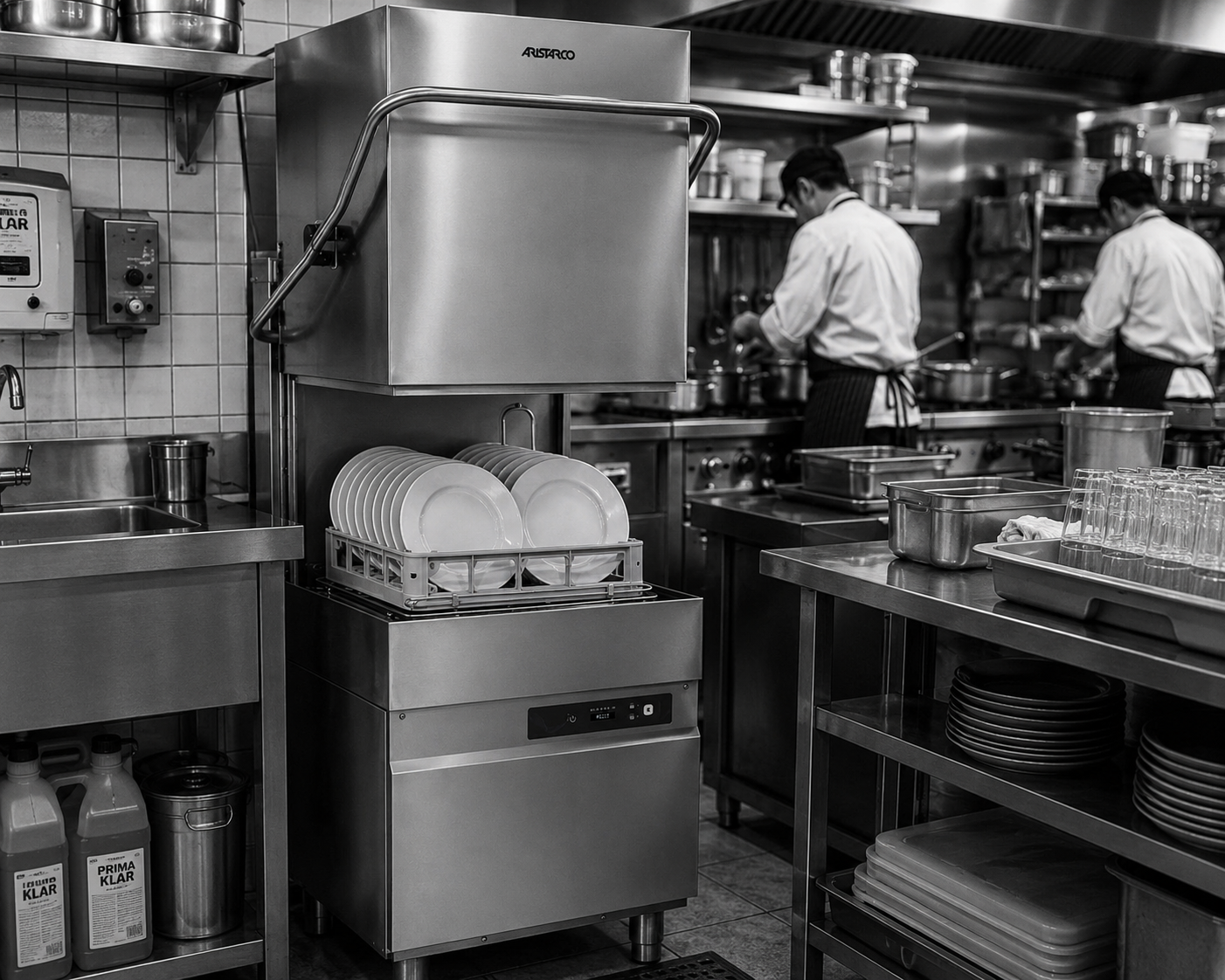
Commercial Dishwasher Not Heating?
Understanding the Possible Causes Before Booking a Repair
If your commercial dishwasher is not heating, it can quickly affect cleaning performance, hygiene and the day-to-day operation of your business.
Commercial dishwashers are designed to operate within manufacturer-specified wash and rinse temperature ranges. If the machine cannot reach those temperatures, dishes and glassware may not be cleaned as intended and some machines may interrupt or delay the wash cycle until the problem is resolved.
The cause is not always obvious. Modern commercial dishwashers use a combination of heating elements, temperature sensors, control systems, water level monitoring and, on many models, a dedicated rinse boiler. A fault in any one of these systems may prevent the dishwasher from heating correctly.
This guide explains some of the most common causes of commercial dishwasher heating problems, outlines a number of safe operator checks and explains when it is appropriate to arrange professional servicing.
Keep Serving Customers With Confidence
Your customers don't see what's happening behind the scenes—but they notice when service slows down.
A commercial dishwasher that takes too long to heat can delay your kitchen, interrupt workflow and create unnecessary pressure during busy periods.
Our goal is simple.
Help you minimise downtime, restore reliable performance and keep serving customers with confidence.
Click Here To Call For Urgent Repairs
How Does a Commercial Dishwasher Heat Water?
Unlike a domestic dishwasher, a commercial dishwasher is designed to wash multiple loads throughout the day while maintaining consistent wash performance.
Depending on the make and model, the machine may include:
A wash tank heating element
A separate rinse or booster boiler
Temperature sensors or thermostats
Water level sensors or pressure switches
Electronic control systems
Safety devices that protect the heating circuit
Many commercial dishwashers will not energise the heating system until the correct water level has been reached and other operating conditions have been satisfied.
Why Is My Commercial Dishwasher Not Heating?
Several different faults can produce similar symptoms.
Correct diagnosis is important because replacing the wrong component can increase repair costs without solving the problem.
Some of the more common causes include:
Heating element failure
Temperature sensor or thermostat faults
Booster or rinse boiler problems
Water level faults
Electrical control faults
Safety cut-out activation
Mineral scale reducing heating efficiency
Electrical supply problems
The exact cause depends on the manufacturer, model and fault condition.
Common Causes Explained
Heating Element Problems
The heating element transfers heat into the wash tank or rinse boiler.
Heating elements may fail due to:
Age
Repeated heating and cooling cycles
Mineral scale accumulation
Electrical faults
Physical damage
A failed element is one possible cause of a dishwasher that no longer heats correctly, but testing is required before replacement.
Temperature Sensor or Thermostat Faults
Commercial dishwashers rely on temperature sensors or thermostats to monitor water temperature.
If these components provide incorrect readings, the control system may prevent the heating circuit from operating correctly or may interrupt the wash cycle to protect the equipment.
Booster or Rinse Boiler Problems
Many commercial dishwashers use a separate rinse or booster boiler to heat rinse water.
If the rinse boiler cannot reach its designed operating temperature, some machines may:
Delay the wash cycle
Display a fault code
Pause during operation
Produce poor rinse results
Not every commercial dishwasher uses a separate booster boiler. The design varies between manufacturers.
Water Level Problems
Before activating the heating system, many commercial dishwashers first confirm that the correct water level has been reached.
If the dishwasher cannot fill correctly because of a blocked inlet filter, faulty inlet valve, level sensor or pressure switch, the heating system may not operate.
Electrical Control Faults
Modern commercial dishwashers contain electronic control systems that manage wash cycles, heating and safety functions.
Faults involving relays, contactors or control boards may prevent the heating circuit from operating correctly.
Because these systems involve high-voltage electrical components, diagnosis should only be carried out by appropriately qualified technicians.
Mineral Scale Build-Up
In areas with hard water, mineral deposits can gradually accumulate on heating elements and boiler components.
Heavy scale reduces heat transfer and may contribute to:
Slower heating
Increased energy consumption
Poor heating performance
Reduced component life
Water treatment and regular preventative maintenance can help reduce scale-related problems.
Safety Devices
Commercial dishwashers often include safety devices designed to protect heating components from damage.
Depending on the machine, these may include high-limit thermostats, thermal cut-outs or other protective devices.
If one of these devices activates or develops a fault, heating may stop until the underlying problem has been identified.
Signs Your Commercial Dishwasher May Have a Heating Problem
Common symptoms include:
The dishwasher does not feel as hot as normal.
Dishes are not cleaning effectively.
Grease remains on plates or cookware.
Glassware appears dull or cloudy.
Wash cycles take longer than expected.
Steam is no longer visible when the door is opened (where steam would normally be expected).
The dishwasher displays a heating or temperature-related fault code.
The machine repeatedly stops during a cycle.
These symptoms do not always indicate a failed heating element. Several different faults can produce similar results.
Safe Checks Before Calling a Technician
Before arranging a service call, operators can safely check:
✓ The dishwasher is switched on.
✓ The water supply is turned on.
✓ The machine has completed its normal filling cycle.
✓ Filters are clean.
✓ No obvious fault code is displayed.
✓ The circuit breaker has not tripped.
✓ Detergent and rinse aid containers are not empty.
Do not remove electrical covers, bypass safety devices or attempt electrical repairs.
Commercial dishwashers contain high-voltage electrical systems and heating components that should only be serviced by appropriately qualified personnel.
Why Proper Heating Matters
Correct operating temperatures help commercial dishwashers perform as intended by the manufacturer.
Proper heating contributes to:
Effective detergent performance.
Removal of grease and food residues.
Consistent wash quality.
Reliable rinse performance.
Efficient drying.
Overall machine performance.
If the dishwasher consistently operates below its intended temperature, professional diagnosis is recommended.
Can You Continue Using a Dishwasher That Isn't Heating?
If a commercial dishwasher is no longer heating correctly, continuing to use it may result in poor cleaning performance and could allow an underlying fault to worsen.
Some machines will prevent operation altogether when heating faults are detected.
If heating problems continue after basic operator checks, arrange professional servicing.
Preventing Heating Problems
Routine preventative maintenance can help identify developing faults before they result in unexpected breakdowns.
Depending on the machine, servicing may include:
Testing heating elements.
Checking thermostats and temperature sensors.
Inspecting rinse boilers.
Assessing water quality.
Removing scale where appropriate.
Inspecting electrical connections.
Verifying operating temperatures.
Checking pumps and circulation systems.
The appropriate service interval depends on the manufacturer's recommendations, water quality and daily usage.
Commercial Dishwasher Brands We Repair
Worldwide CDM repairs and services many leading commercial dishwasher brands, including:
Don't see your dishwasher brand listed?
Our experienced technicians repair many other commercial dishwasher makes and models used throughout Sydney.
Frequently Asked Questions
Why isn't my commercial dishwasher heating?
A commercial dishwasher may stop heating due to several different faults, including heating element problems, temperature sensor faults, rinse boiler issues, electrical control faults or water level problems. Correct diagnosis is important because several faults can produce similar symptoms.
Can hard water stop my dishwasher from heating?
Hard water itself does not normally stop a dishwasher from heating. However, mineral scale can build up on heating elements and boiler components, reducing heat transfer and contributing to heating-related problems over time.
Can I replace the heating element myself?
Commercial dishwashers contain high-voltage electrical systems and should only be repaired by appropriately qualified personnel. Incorrect diagnosis or installation may damage the machine or create safety risks.
Why does my dishwasher pause before heating?
Many commercial dishwashers complete a programmed sequence before activating the heating circuit. Depending on the model, the machine may first verify water level, door status, temperature sensor readings and other operating conditions.
Do all commercial dishwashers have a rinse boiler?
No. Many commercial dishwashers use a separate rinse or booster boiler, but the design varies between manufacturers and models.
How often should a commercial dishwasher be serviced?
Service intervals depend on the manufacturer's recommendations, water quality and daily usage. Preventative maintenance helps identify developing faults before they lead to unexpected breakdowns.
Need Commercial Dishwasher Repairs in Sydney?
If your commercial dishwasher is not heating correctly, Worldwide CDM provides professional fault diagnosis, repairs and preventative maintenance throughout Sydney.
With more than 30 years of experience, we support cafés, restaurants, hotels, pubs, clubs and commercial kitchens with reliable commercial catering equipment repairs.
Whether the problem involves the heating system, rinse boiler, temperature controls or another component, our experienced technicians can help identify the cause and recommend the appropriate repair.
Request a Repair
If your commercial dishwasher has stopped heating or isn't performing as it should, we're here to help.
Related Commercial Catering Equipment Repairs
Worldwide CDM also provides professional repairs for: