
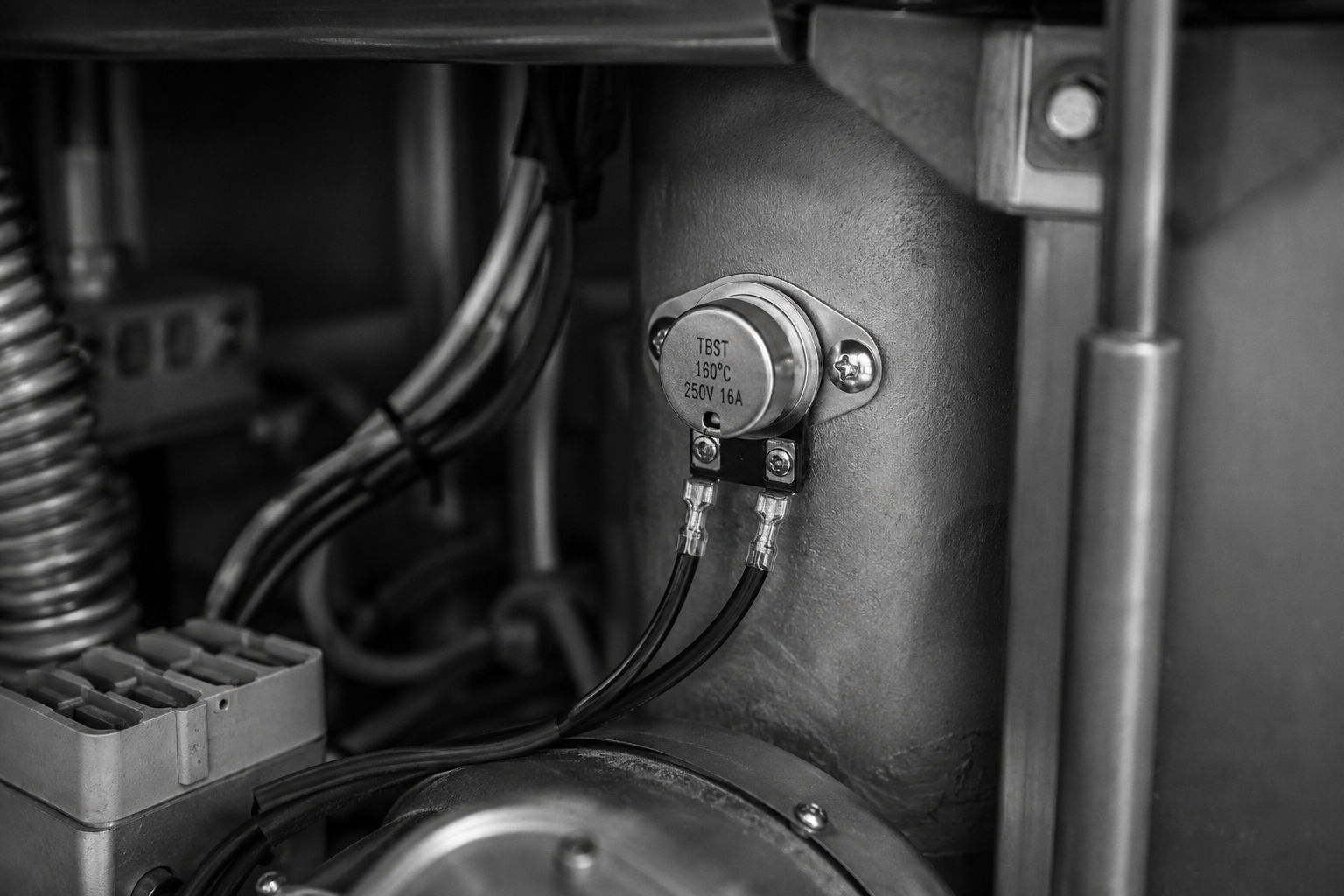
Commercial Dishwasher Thermostat Problems
When Your Commercial Dishwasher Isn't Heating Correctly, The Thermostat May Only Be Part of the Story
A commercial dishwasher that struggles to reach operating temperature, overheats or displays heating-related fault codes can quickly affect your kitchen's productivity. Poor temperature control may reduce cleaning performance, extend wash cycles and, depending on the machine, affect thermal sanitising.
Many people assume these symptoms automatically mean the thermostat has failed.
In reality, commercial dishwashers use several components to monitor and regulate water temperature. Depending on the make and model, this may include thermostats, temperature probes, thermistors, heating elements, electronic controllers and high-limit safety devices.
At Worldwide CDM, we've helped Sydney restaurants, cafés, pubs, clubs, hotels, hospitals and commercial kitchens minimise equipment downtime for more than 30 years. Rather than replacing parts based on assumptions, our experienced technicians diagnose the complete heating system to identify the actual cause of the problem.
Keep Serving Customers With Confidence
Your customers don't see what's happening behind the scenes—but they notice when service slows down.
A commercial dishwasher that takes too long to heat can delay your kitchen, interrupt workflow and create unnecessary pressure during busy periods.
Our goal is simple.
Help you minimise downtime, restore reliable performance and keep serving customers with confidence.
How Does Temperature Control Work in a Commercial Dishwasher?
Commercial dishwashers are designed to maintain water within operating temperature ranges specified by the manufacturer.
To achieve this, the heating system may include:
Heating elements
Temperature probes or thermistors
Thermostats
High-limit safety thermostats
Booster heaters
Electronic control boards
Electrical relays
Water level monitoring systems
These components work together to heat the wash and rinse water, monitor temperature and protect the dishwasher from overheating.
On many modern commercial dishwashers, the electronic controller continually monitors water temperature through sensors, while a high-limit thermostat provides an additional level of protection if abnormal overheating occurs.
What You May Notice
If the temperature control system isn't operating correctly, you may notice:
The dishwasher takes longer to heat.
Water never reaches operating temperature.
Wash cycles take longer than normal.
Heating-related error codes appear.
Dishes remain greasy.
Glassware isn't as clean as expected.
The dishwasher repeatedly stops during heating.
The machine overheats or shuts down unexpectedly.
Several different faults can produce these symptoms.
Why Thermostat Problems Occur
Although thermostats are designed for long-term reliability, they operate in an environment exposed to heat, moisture and continuous commercial use.
Possible causes of thermostat-related problems include:
Normal component wear.
Electrical connection faults.
High-limit safety thermostat activation.
Temperature sensor faults.
Electronic control issues.
Heating element faults.
Mineral scale reducing heating efficiency.
Because these faults often produce similar symptoms, professional diagnosis is important before replacing components.
Common Causes Explained
High-Limit Safety Thermostat Activated
Many commercial dishwashers incorporate a high-limit safety thermostat designed to interrupt the heating circuit if excessive temperatures are detected.
This safety device helps protect both the dishwasher and its heating components from overheating. If it activates, the underlying cause should be identified before the dishwasher is returned to service.
Temperature Sensor or Thermistor Problems
Many newer commercial dishwashers use electronic temperature sensors rather than relying solely on mechanical thermostats.
If the sensor reports incorrect temperatures, the electronic controller may:
stop heating too early,
continue heating too long,
delay wash cycles,
or generate temperature-related fault codes.
Heating Element Problems
A heating element that is partially failing or heavily affected by mineral scale may prevent the dishwasher reaching operating temperature.
This can appear similar to a thermostat fault even though the thermostat is functioning correctly.
Electronic Control Problems
Modern commercial dishwashers rely on electronic controllers to coordinate heating.
If the controller cannot correctly interpret information from the temperature monitoring system, heating performance may be affected.
Mineral Scale
Hard water can leave mineral deposits on heating components.
Scale reduces heat transfer efficiency and increases the time required for the dishwasher to reach operating temperature.
Routine preventative maintenance helps reduce this problem.
Why Correct Diagnosis Matters
One of the biggest misconceptions is that every heating problem is caused by a faulty thermostat.
In reality, similar symptoms may result from:
Heating elements
Temperature sensors
High-limit thermostats
Booster heaters
Electronic controls
Mineral scale
Wiring faults
Although the dishwasher behaves the same way, the required repair can be completely different.
At Worldwide CDM, we diagnose the complete heating system before recommending repairs because we believe in providing honest advice and recommending only the work your equipment genuinely needs.
Safe Operator Checks
Before arranging a service visit, operators can safely:
✔ Allow the dishwasher sufficient warm-up time.
✔ Check that daily cleaning has been completed.
✔ Ensure filters are clean.
✔ Confirm adequate water supply.
✔ Record any fault codes displayed.
Do not remove electrical panels or attempt to bypass safety thermostats.
Commercial dishwashers contain high-voltage electrical systems that should only be serviced by appropriately qualified technicians.
Can Continued Use Cause Damage?
Depending on the underlying fault, continuing to operate a dishwasher with temperature-control problems may:
Reduce cleaning performance.
Affect thermal sanitising on high-temperature machines.
Increase wash cycle times.
Increase energy consumption.
Place additional stress on heating components.
If the dishwasher cannot consistently achieve the temperatures intended by the manufacturer, professional assessment is recommended.
Preventing Thermostat and Temperature Control Problems
Routine preventative maintenance may include:
Verifying operating temperatures.
Inspecting heating elements.
Testing temperature sensors.
Checking high-limit safety devices.
Removing mineral scale where appropriate.
Inspecting electrical connections.
Confirming heating performance against manufacturer specifications.
Preventative servicing helps identify developing faults before they interrupt kitchen operations.
Commercial Dishwasher Brands We Repair
Worldwide CDM repairs and services many leading commercial dishwasher brands, including:
Don't see your dishwasher brand listed?
Our experienced technicians repair many other commercial dishwasher makes and models used throughout Sydney.
What Happens When You Book a Service?
Arranging a commercial catering equipment repair shouldn't be complicated.
When you contact Worldwide CDM, we'll guide you through the process from your first phone call through to the completion of your repair, keeping you informed every step of the way.
Step 1 – Tell Us About the Problem
Contact our team and let us know:
What type of commercial equipment you have.
The make and model (if known).
The symptoms you've noticed.
When the problem started.
This information helps us understand the issue before attending your site and allows us to prepare where possible.
Step 2 – Professional Diagnosis
One of our experienced technicians will inspect your commercial catering equipment and identify the underlying cause of the fault.
Many commercial dishwasher problems produce similar symptoms, so we focus on accurate diagnosis before recommending any repairs.
Rather than replacing parts based on assumptions, we investigate the complete system to determine what's actually causing the problem.
Step 3 – Honest Advice and Transparent Recommendations
Once we've identified the fault, we'll explain:
What we've found.
Why the problem has occurred.
The recommended repair.
Whether replacement parts are required.
Any available options.
If genuine manufacturer spare parts are available, we'll recommend their use to help maintain compatibility and reliable performance.
Our philosophy has always been simple:
We recommend only the repairs your equipment genuinely needs.
If a repair isn't necessary, we'll tell you.
Step 4 – Get Back to Business
Our goal is to restore your equipment as efficiently and professionally as possible, helping minimise disruption to your kitchen and allowing you to get back to serving your customers with confidence.
Whether we're repairing a commercial dishwasher, glasswasher, oven, fryer or another piece of commercial catering equipment, we're focused on providing practical solutions and reliable workmanship that help keep your kitchen operating smoothly.
Why Choose Worldwide CDM?
Choosing the right repair company isn't just about fixing today's problem—it's about finding a team you can trust whenever your commercial kitchen equipment needs attention.
For more than 30 years, Worldwide CDM has supported Sydney's hospitality industry with honest advice, professional repairs and dependable service.
When you choose Worldwide CDM, you can expect:
✔ Family-owned and operated business
✔ Supporting Sydney's hospitality industry for over 30 years
✔ Experienced technicians specialising in commercial catering equipment
✔ Honest advice with no unnecessary repairs recommended
✔ Genuine manufacturer spare parts where available
✔ Preventative maintenance to help reduce unexpected breakdowns
✔ Professional workmanship backed by decades of industry experience
✔ Clear communication throughout the repair process
Frequently Asked Questions
Does every commercial dishwasher have a thermostat?
Not necessarily. Many modern commercial dishwashers regulate temperature using electronic temperature sensors (thermistors or probes) together with electronic controls, while others also incorporate thermostats or high-limit safety thermostats. The design depends on the manufacturer and model.
Can a thermostat cause a commercial dishwasher not to heat?
Yes, depending on the machine. However, similar symptoms can also be caused by heating elements, temperature sensors, control boards or electrical faults. Professional diagnosis helps identify the actual cause.
What does a high-limit thermostat do?
A high-limit thermostat is a safety device designed to interrupt the heating circuit if excessive temperatures are detected, helping protect the dishwasher from overheating.
Should I replace the thermostat myself?
Temperature-control systems form part of the dishwasher's electrical safety system. Diagnosis and replacement should be carried out by appropriately qualified technicians.
Need Commercial Dishwasher Repairs in Sydney?
When your commercial dishwasher isn't heating correctly, the solution isn't always replacing the thermostat—it's identifying the actual cause of the temperature-control problem.
For more than 30 years, Worldwide CDM has helped Sydney's hospitality industry minimise equipment downtime through honest advice, professional repairs and preventative maintenance.
Our experienced technicians diagnose the complete heating system, explain the recommended repair and use genuine manufacturer spare parts where available to help restore reliable operation
Related Commercial Catering Equipment Repairs
Worldwide CDM also provides professional repairs for: