
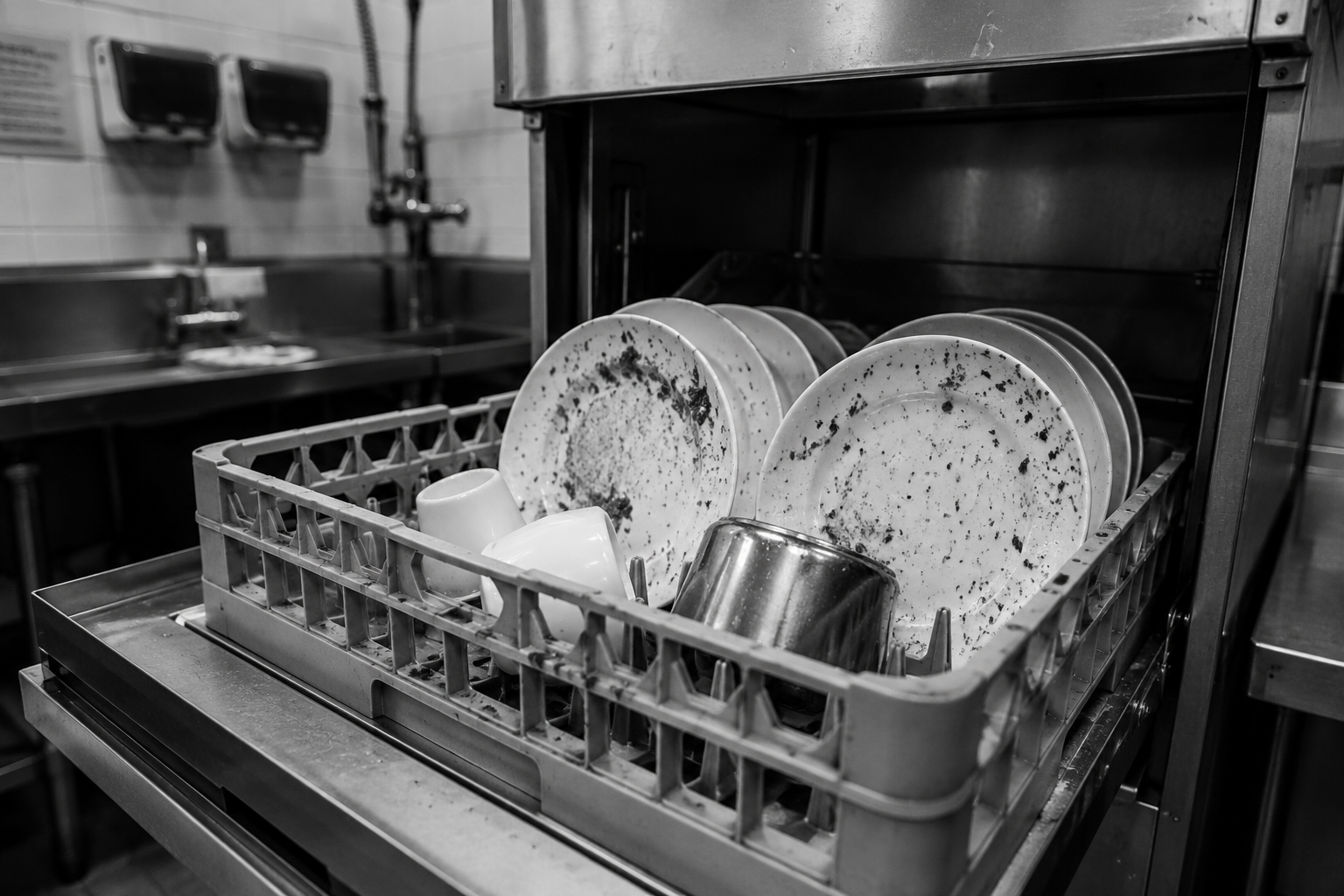
Commercial Dishwasher Leaving Dishes Dirty?
Stop Rewashing Dishes. Get Your Dishwasher Performing Properly Again.
When dishes start coming out of your commercial dishwasher dirty, greasy or still covered in food residue, your team ends up doing the same job twice.
During a busy service, that means more than dirty plates.
It can mean rewashing racks, running extra cycles, slowing down your wash area and making it harder to keep clean crockery available when your kitchen needs it.
A commercial dishwasher that still turns on and completes its cycle can still have a performance problem.
Worldwide CDM provides professional commercial dishwasher repairs across Sydney, diagnosing poor wash performance and identifying what's preventing your machine from cleaning properly.
Keep Serving Customers With Confidence.
Why Is My Commercial Dishwasher Leaving Dishes Dirty?
There isn't one universal cause.
Poor wash results can be caused by something as straightforward as incorrect loading or clogged filters—or by a problem involving the dishwasher's wash pump, water level, temperature, chemical dosing or circulation system.
Commercial dishwasher manufacturer troubleshooting information identifies several of these as recognised causes of poor cleaning performance.
The first step is determining what has changed and which part of the wash process isn't performing correctly.
1. Blocked Commercial Dishwasher Wash Arms
Wash arms distribute water throughout the dishwasher.
Their openings can become restricted by food debris, mineral deposits or other material.
If water cannot pass through the wash-arm openings correctly—or the wash arms aren't rotating as intended—parts of the rack may receive inadequate washing action.
Hobart specifically lists wash-arm obstruction and wash arms failing to turn among possible causes of dishes not being cleaned properly.
Kitchen staff can generally inspect and clean operator-removable wash arms according to the manufacturer's instructions.
If the arms are clean but wash performance remains weak, further diagnosis may be required.
2. Dirty or Blocked Filters and Strainers
Commercial dishwashers process large amounts of food soil every day.
Filters and strainers help prevent debris from circulating through parts of the wash system.
If they're heavily contaminated or blocked, water flow to the pump can be affected.
Commercial dishwasher manufacturer troubleshooting documentation identifies clogged strainers restricting the water supply to the pump as one cause of dirty dishes.
Regular operator cleaning is therefore important.
But if the filters are clean and performance remains poor, don't assume cleaning them again will solve the underlying fault.
3. Commercial Dishwasher Wash Pump Problems
The wash pump is responsible for circulating wash water through the machine's wash system.
A problem affecting the pump or its water supply can result in inadequate circulation and poor cleaning performance.
Symptoms may include:
Weak washing action
Food remaining on dishes
Uneven results across a rack
A change in normal pump noise
Reduced water movement from the wash arms
Poor results despite clean wash arms
Manufacturer troubleshooting information also identifies loss of water pressure caused by pump obstruction as a potential reason dishes aren't being cleaned correctly.
A wash-pump problem should be diagnosed rather than assumed from dirty dishes alone.
4. Low Water Level
Your commercial dishwasher may fill and begin washing but still have an abnormal operating water level.
If there isn't sufficient water available to the wash system, circulation and cleaning performance can be affected.
This is why dirty dishes can sometimes be the first symptom of a filling or water-level problem.
Hobart's troubleshooting guidance specifically identifies low water and insufficient wash water among possible causes of dishes not being cleaned.
Click Here For Commercial Dishwasher Low Water Level Problems
5. Incorrect Wash Temperature
Temperature is another important part of commercial warewashing.
If the machine isn't reaching the operating temperatures required by its design, washing performance can be affected.
Manufacturer troubleshooting guidance lists incorrect or insufficient water temperature among potential causes of poor cleaning results.
Temperature problems can have several possible causes depending on the machine, including faults involving its heating and temperature-control systems.
If the displayed temperatures are consistently abnormal, record what the machine is showing and tell the technician when booking.
Click Here For Commercial Dishwasher Not Reaching Temperature
6. Detergent or Chemical Dosing Problems
Mechanical operation isn't the only factor involved in commercial dishwashing.
Correct detergent concentration is also important.
If the detergent dosing system isn't operating correctly, or unsuitable chemicals or concentrations are being used, cleaning performance can suffer even when the dishwasher itself appears to be running.
Depending on the problem, the chemical supplier or dishwasher technician may need to investigate.
Don't simply increase the detergent setting yourself unless adjustment is part of an authorised operator procedure.
7. Incorrect Rack Loading
Sometimes there is no failed component.
How dishes are loaded can substantially affect whether wash water reaches their surfaces.
Manufacturer troubleshooting information specifically identifies improper rack loading as a possible cause of dirty dishes.
Avoid:
Overloading racks
Stacking items over one another
Positioning large items so they shield other dishes
Loading items in a way that interferes with wash-arm movement
If your dishwasher cleans normally with a lightly and correctly loaded rack but struggles when overloaded, the machine itself may not necessarily be faulty.
8. Too Much Food Soil Entering the Dishwasher
A commercial dishwasher isn't a substitute for appropriate scraping and preparation.
Large amounts of food soil entering the machine increase the load on its filters and wash system.
Follow the manufacturer's recommended preparation procedures for your particular machine.
9. Scale and Mineral Deposits
Mineral deposits can accumulate within parts of a warewashing system, particularly where water conditions and maintenance allow scale to develop.
The appropriate cleaning, deliming or water-treatment requirements depend on the equipment and local water conditions.
10. Rinse-System Problems
It's also important to determine whether dishes are actually dirty after washing or whether the customer is seeing a problem with the final appearance of dishes and glassware.
Spotting, streaking, residue and poor drying can involve different factors from food remaining on dishes.
That can include rinse conditions, chemicals and water quality.
Are the Dishes Dirty — or Is There Residue on Them?
This is a useful diagnostic distinction.
Food Still on Dishes
If physical food debris remains, investigate factors affecting wash action, circulation, loading, filters, water level and wash performance.
Greasy Dishes
Greasy results may require investigation of wash temperature, detergent performance, circulation and operating conditions.
White Film or Mineral Deposits
A white or chalky appearance can point toward a different set of factors, including water quality, scale and chemical conditions.
Spots or Streaks
Spotting can involve loading, rinse conditions, water quality or chemical concentration. Hobart separately identifies improper loading, low temperature, inappropriate detergent concentration and hard water among possible contributors to spotting.
This distinction helps customers describe the actual symptom rather than calling every poor result "dirty dishes."
Is the Whole Rack Dirty or Only Certain Dishes?
Everything Comes Out Dirty
If poor results affect the entire load, the technician may need to consider systems affecting overall machine performance, such as water circulation, water level, temperature or chemical dosing.
One Area of the Rack Is Worse
If dishes consistently come out dirty in one particular position, tell the technician.
That pattern can provide useful information when inspecting wash-water distribution and wash-arm performance.
The Problem Comes and Goes
Intermittent poor cleaning is also useful diagnostic information.
Tell us whether it happens:
During busy periods
On particular cycles
After several consecutive loads
Only with certain racks
Since a particular change or service
These details can help narrow the investigation.
What Can Kitchen Staff Check Before Calling a Technician?
Before arranging a repair, there are several basic operator checks worth performing.
1. Clean the Filters and Strainers
Clean operator-accessible components according to the manufacturer's instructions.
2. Inspect the Wash Arms
Check accessible wash arms for obvious obstruction and confirm operator-removable components are correctly installed.
3. Check Rack Loading
Run a correctly loaded rack without overcrowding it.
4. Scrape Dishes Correctly
Remove excessive food soil before loading according to your machine's operating procedure.
5. Check the Displayed Temperatures
If your dishwasher displays wash and rinse temperatures, note them.
Don't adjust internal thermostats or controls yourself.
6. Check the Chemicals
Make sure the appropriate commercial dishwasher chemicals are connected and haven't run out.
7. Look for an Error Code
If an error appears, photograph it before resetting the machine.
If you've done the normal operator checks and dishes are still coming out dirty, the problem may require professional diagnosis.
Don't Just Keep Running Dishes Through Again
Rewashing Is a Symptom — Not a Solution.
When the dishwasher stops cleaning properly, the easiest response during service can be:
"Just put the rack through again."
But repeatedly running extra cycles doesn't identify why wash performance has deteriorated.
It can also consume additional staff time, water, chemicals and energy while the underlying problem remains.
If a machine that previously cleaned properly suddenly requires repeated cycles, investigate the cause.
Commercial Dishwasher Not Cleaning Properly Repairs Sydney
Worldwide CDM diagnoses and repairs commercial dishwasher wash-performance problems across Sydney.
Depending on the fault and machine, we can investigate problems involving:
Wash pumps
Wash arms and water circulation
Water-level systems
Inlet and filling systems
Heating components
Thermostats and temperature controls
Chemical dosing systems
Filters and strainers
Electrical and electronic controls
Related wash and rinse components
The goal isn't simply to make the dishwasher run.
It's to help restore the wash performance your commercial kitchen relies on.
Can Poor Commercial Dishwasher Cleaning Be Prevented?
Not every component failure can be prevented, but correct operation and maintenance can reduce avoidable wash-performance problems.
Kitchen staff should:
Scrape excessive food soil before loading.
Clean filters and strainers as required.
Keep operator-removable wash arms clean.
Load racks according to the manufacturer's instructions.
Use suitable commercial dishwasher chemicals.
Monitor displayed operating temperatures where applicable.
Report changes in wash-pump noise or wash performance.
Don't ignore recurring error codes.
Follow the manufacturer's cleaning and maintenance requirements.
Arrange appropriate preventative servicing.
Types of Commercial Dishwashers We Repair
Low-water and filling problems can occur across different commercial dishwasher configurations.
Worldwide CDM services:
Underbench Commercial Dishwashers
Commonly used in cafés, bars, restaurants and smaller commercial kitchens.
Pass-Through / Hood-Type Dishwashers
Used in higher-volume kitchens where reliable, repeated wash cycles are essential during service.
Pot & Utensil Washers
Heavy-duty machines designed for larger cookware, utensils and kitchen equipment.
Commercial Dishwasher Brands We Repair
Worldwide CDM repairs and services many leading commercial dishwasher brands, including:
Don't see your dishwasher brand listed?
Our experienced technicians repair many other commercial dishwasher makes and models used throughout Sydney.
How Worldwide CDM Diagnoses Poor Wash Performance
You Don't Need to Guess What's Wrong.
Your team's job is to keep the kitchen moving.
Our job is to work out why the dishwasher isn't doing its job.
1. Tell Us What's Happening
Give us the dishwasher's brand, model, symptoms and any error code.
Tell us whether dishes are:
Dirty
Greasy
Covered in food
Spotty
Cloudy
or whether only part of the rack is affected.
2. We Diagnose the Cause
Our technician assesses the relevant systems based on the symptoms and particular machine.
That may involve the:
Wash system
Wash arms
Filters and strainers
Wash pump
Water level
Filling system
Heating system
Chemical dosing
Controls
and other model-specific components.
3. We Explain What We've Found
You'll receive straightforward advice about the cause and what is required to correct it.
4. We Repair the Fault
Where repair is required, we repair or replace the relevant components using appropriate parts, including genuine manufacturer parts where available.
5. We Test the Dishwasher
Following repair, the relevant machine functions are tested to confirm the reported problem has been addressed.
Diagnose first. Repair what actually needs repairing.
Why Choose Worldwide CDM?
Your Customers Don't Care Why the Dishwasher Isn't Working. They Just Need Clean Dishes.
When your kitchen is busy, your team shouldn't have to spend service rewashing rack after rack.
Worldwide CDM acts as the guide: you tell us what's happening, we diagnose the problem, and we help determine the appropriate repair.
Worldwide CDM provides:
✔ 30+ years supporting Sydney's hospitality industry
✔ Experienced commercial catering equipment technicians
✔ Commercial dishwasher fault diagnosis and repairs
✔ Repairs for leading commercial dishwasher brands
✔ Genuine spare parts
✔ Preventative maintenance programs
✔ Reliable workmanship
✔ Straightforward, honest advice
✔ Service across Sydney
Frequently Asked Questions
Why is my commercial dishwasher suddenly leaving dishes dirty?
If a dishwasher that previously cleaned correctly suddenly produces poor results, possible causes include clogged strainers or wash arms, inadequate wash circulation, low water, temperature problems or chemical dosing issues. Operational factors such as rack loading and excessive food soil should also be checked.
Why is food still stuck to dishes after the dishwasher finishes?
Insufficient wash action, blocked wash arms, pump/circulation problems, incorrect loading, excessive food soil and other wash-system issues can contribute. The pattern of dirty dishes can provide useful diagnostic information.
Can a faulty wash pump cause dirty dishes?
Yes. Problems that reduce wash-water circulation or pressure can affect cleaning performance. Manufacturer troubleshooting guidance specifically identifies loss of water pressure due to pump obstruction as a potential cause.
Can low water level cause poor washing?
Yes. Manufacturer troubleshooting information identifies low or insufficient wash water as a potential cause of dishes not being cleaned correctly.
Can low temperature cause dishes to come out dirty?
Incorrect wash-water temperature is a recognised potential cause of poor cleaning performance. The required operating conditions depend on the particular commercial dishwasher, so use the manufacturer's specifications rather than applying a single temperature to every machine.
Why are only some dishes coming out dirty?
Incorrect loading or restricted water distribution may result in uneven cleaning. If the same area of every rack consistently performs poorly, mention that pattern when booking a service.
Should I just increase the detergent?
No. Don't compensate for poor cleaning by arbitrarily increasing chemical dosing. Incorrect detergent concentration can itself contribute to poor results. Check your chemical system and follow the detergent supplier and equipment manufacturer's requirements.
Do you repair commercial dishwashers that aren't cleaning properly in Sydney?
Yes. Worldwide CDM diagnoses commercial dishwasher wash-performance faults across Sydney, including problems involving wash pumps, wash arms, filling, water level, heating, chemical dosing and related systems on the brands it services.
Commercial Dishwasher Still Leaving Dishes Dirty?
Stop Rewashing. Get the Problem Diagnosed.
You need clean dishes ready for service—not racks repeatedly going back through the dishwasher.
Tell Worldwide CDM what's happening.
We'll help identify what's affecting your dishwasher's performance and determine the appropriate repair.
Keep Serving Customers With Confidence.
Related Commercial Catering Equipment Repairs
Worldwide CDM also provides professional repairs for: