
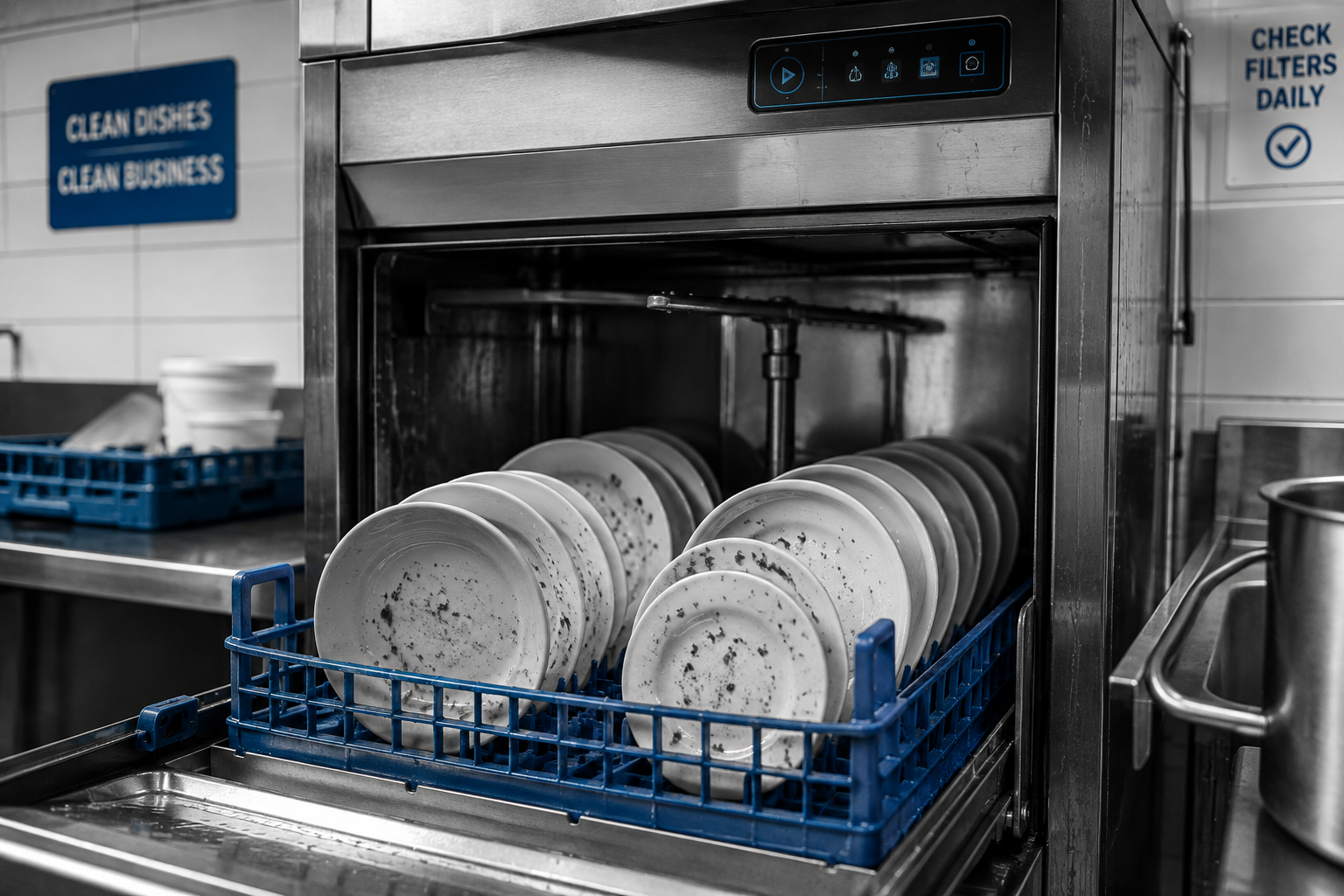
Commercial Dishwasher Not Cleaning Properly?
Poor Washing Performance Can Slow Your Entire Kitchen
When a commercial dishwasher isn't cleaning dishes properly, the problem quickly affects more than just dirty plates. Staff may need to rewash items by hand, service slows down and valuable time is lost during busy periods.
If your commercial dishwasher is leaving food residue, grease, cloudy glasses or poorly cleaned crockery, the cause isn't always obvious. Several different systems work together to produce consistent wash results, and a fault in any one of them can affect cleaning performance.
The good news is that poor washing performance does not always mean the dishwasher requires major repairs. Some issues are related to daily maintenance or operating conditions, while others require professional diagnosis.
This guide explains the common reasons a commercial dishwasher may not be cleaning properly, outlines safe checks operators can perform and explains when professional servicing is recommended.
Keep Serving Customers With Confidence
Your customers don't see what's happening behind the scenes—but they notice when service slows down.
A commercial dishwasher that takes too long to heat can delay your kitchen, interrupt workflow and create unnecessary pressure during busy periods.
Our goal is simple.
Help you minimise downtime, restore reliable performance and keep serving customers with confidence.
Click Here To Call For Urgent Repairs
How Does a Commercial Dishwasher Clean Effectively?
Commercial dishwashers are designed to clean by combining several factors, including:
Correct wash water temperature
Adequate rinse temperature (where applicable)
Proper water circulation
Appropriate detergent
Correct rinse aid dosing
Effective wash pump performance
Clean wash arms and jets
Sufficient water pressure
Correct loading techniques
If one or more of these factors is affected, overall cleaning performance may decline.
Why Isn't My Commercial Dishwasher Cleaning Properly?
Several different issues can produce similar symptoms.
Common causes include:
Wash water not reaching the correct operating temperature
Blocked wash arms or spray jets
Dirty filters
Worn or damaged wash pump components
Incorrect detergent
Incorrect rinse aid settings
Hard water or mineral scale
Overloading the dishwasher
Poor loading of racks
Low water pressure
Mechanical or electrical faults
Correct diagnosis is important because replacing components without identifying the actual cause may not resolve the problem.
Common Causes Explained
Wash Water Temperature Problems
Commercial dishwashers are designed to operate within manufacturer-specified wash and rinse temperatures.
If the dishwasher cannot reach these temperatures, detergent may not perform as intended and grease or food residues may remain on dishes.
If you suspect a heating issue, read our guide on Commercial Dishwasher Not Heating.
Blocked Wash Arms
Wash arms distribute water throughout the dishwasher.
Food particles, labels, broken crockery or mineral deposits can partially block the spray jets, reducing water coverage and leaving some items poorly cleaned.
Regular inspection and cleaning in accordance with the manufacturer's recommendations can help maintain performance.
Dirty Filters
Filters help prevent food debris from entering the wash pump and drainage system.
If filters become heavily soiled, water circulation may be reduced, affecting cleaning performance.
Cleaning filters should form part of the dishwasher's routine daily maintenance.
Wash Pump Problems
The wash pump circulates water through the wash arms.
If the pump becomes worn or develops a mechanical or electrical fault, water circulation may be reduced and dishes may not be cleaned effectively.
Professional testing is usually required to confirm wash pump faults.
Detergent and Rinse Aid
Commercial dishwashers rely on chemicals suited to the machine and application.
Poor washing results may occur if:
Incorrect detergent is used.
Detergent concentration is incorrect.
Rinse aid is empty or incorrectly dosed.
Chemical suppliers or service technicians can help confirm correct dosing.
Hard Water and Mineral Scale
Hard water can contribute to mineral deposits on internal components and glassware.
Scale build-up may reduce heating efficiency and contribute to cloudy glasses or reduced cleaning performance over time.
Appropriate water treatment and preventative maintenance can help reduce these issues.
Incorrect Loading
Overloading racks or placing large items where they obstruct the wash arms may prevent water from reaching all surfaces.
Following the manufacturer's loading recommendations helps maximise wash performance.
Signs Your Commercial Dishwasher Has a Cleaning Performance Problem
Common symptoms include:
Food residue remaining on plates
Greasy dishes
Cloudy or streaky glasses
White mineral deposits
Detergent residue
Water spots
Items requiring a second wash
Uneven cleaning across a rack
Several different faults can produce these symptoms, so professional diagnosis may be required.
Safe Checks Before Booking a Repair
Operators can safely check:
✓ Filters are clean.
✓ Wash arms rotate freely.
✓ Spray jets are not visibly blocked.
✓ Detergent and rinse aid containers are full.
✓ The dishwasher has completed its full wash cycle.
✓ Dishes are not overloaded or incorrectly positioned.
✓ A fault code is not displayed.
Do not dismantle pumps, electrical components or control systems.
Why Professional Diagnosis Matters
A commercial dishwasher leaving dishes dirty does not automatically mean the wash pump or heating element has failed.
For example, the same symptom may result from:
blocked wash arms
low wash temperature
incorrect detergent
rinse aid problems
poor loading practices
hard water
wash pump faults
electrical faults
Professional diagnosis helps identify the underlying cause before replacement parts are fitted, reducing unnecessary expense and downtime.
Poor Cleaning vs Poor Sanitising – What's the Difference?
Many people assume that if dishes look clean, they have been cleaned properly.
In reality, visible cleanliness and hygienic washing are not always the same thing.
Commercial dishwashers are engineered to operate within manufacturer-specified wash and rinse conditions. These operating conditions are designed to support effective cleaning and, depending on the machine and application, may also contribute to thermal or chemical sanitising processes.
If a dishwasher is not heating correctly, is using incorrect chemicals or is not completing its wash programme as designed, cleaning performance may be affected even when dishes appear visually clean.
If you notice ongoing cleaning problems, professional diagnosis can help identify whether the issue relates to heating, water circulation, chemical dosing or another component of the wash system.
Preventing Poor Cleaning Performance
Routine preventative maintenance helps maintain reliable wash performance.
Depending on the machine, servicing may include:
Inspecting wash arms
Cleaning filters
Testing heating systems
Checking chemical dosing
Assessing water quality
Inspecting pumps
Testing operating temperatures
Identifying worn components
Combined with daily operator cleaning, preventative servicing can help extend equipment life and reduce unexpected breakdowns.
Commercial Dishwasher Brands We Repair
Worldwide CDM repairs and services many leading commercial dishwasher brands, including:
Don't see your dishwasher brand listed?
Our experienced technicians repair many other commercial dishwasher makes and models used throughout Sydney.
Frequently Asked Questions
Why is my commercial dishwasher leaving dishes dirty?
Poor cleaning performance can result from several factors, including low wash temperatures, blocked wash arms, dirty filters, incorrect detergent, hard water, poor loading practices or mechanical faults. Correct diagnosis helps identify the underlying cause.
Why are my glasses coming out cloudy?
Cloudy glasses may be caused by mineral deposits from hard water, incorrect rinse aid dosing, inadequate rinse performance or unsuitable detergents. The exact cause depends on the machine, water quality and operating conditions.
Can blocked wash arms affect cleaning?
Yes. If spray jets become blocked, water distribution may be reduced, leaving some dishes or glassware inadequately cleaned.
Does detergent affect commercial dishwasher performance?
Yes. Commercial dishwashers are designed to operate with suitable detergents and correct dosing. Incorrect chemicals or dosing can affect cleaning results.
Can hard water reduce cleaning performance?
Hard water can contribute to mineral scale and deposits on internal components and glassware. Water treatment may be recommended depending on local water conditions and the manufacturer's guidance.
Need Commercial Dishwasher Repairs in Sydney?
When your commercial dishwasher isn't cleaning properly, you need more than a quick fix—you need the correct diagnosis.
For more than 30 years, Worldwide CDM has helped restaurants, cafés, pubs, clubs, hotels, hospitals and commercial kitchens across Sydney keep their dishwashing equipment operating reliably.
Our experienced technicians will identify the underlying cause of poor washing performance, explain the recommended repair and use genuine manufacturer parts wherever available.
Related Commercial Catering Equipment Repairs
Worldwide CDM also provides professional repairs for: