
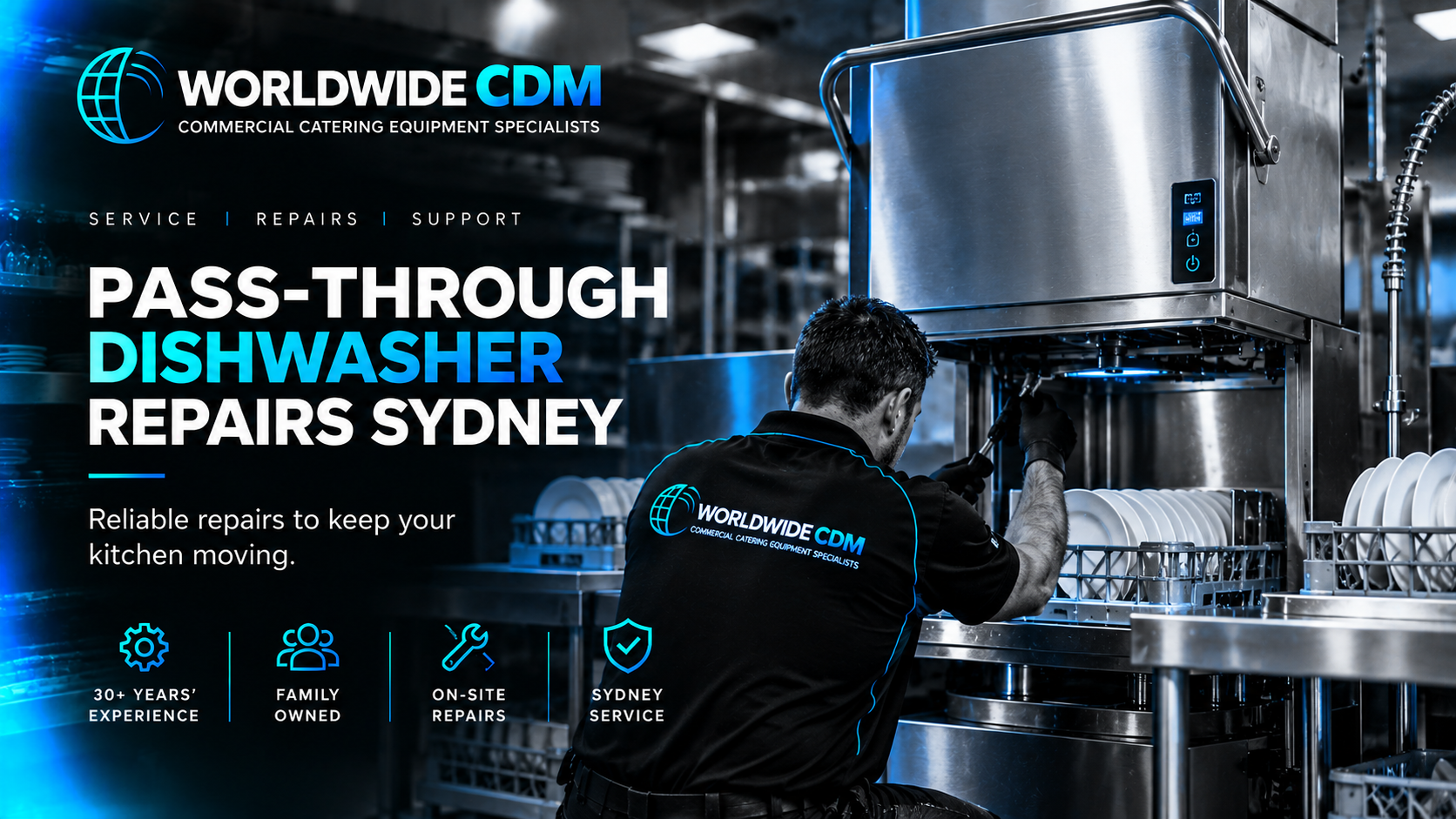
Pass-Through Dishwasher Repairs Sydney
Pass-Through Dishwasher Down? Keep Your Kitchen Moving.
In a busy commercial kitchen, your pass-through dishwasher isn't just another appliance.
It's part of the workflow.
Dirty plates arrive.
Racks are loaded.
The hood comes down.
Clean crockery needs to come out ready for the next service.
When the dishwasher suddenly stops heating, won't fill, leaves dishes dirty or refuses to start, that entire process slows down.
Dirty dishes begin backing up.
Staff lose time.
Service becomes harder.
And replacing parts based on guesswork can make an already expensive problem worse.
Worldwide CDM provides pass-through dishwasher repairs across Sydney, diagnosing faults in commercial hood-type dishwashers used in restaurants, hotels, pubs, clubs, cafés, function centres and commercial kitchens.
With more than 30 years of commercial catering equipment experience, our approach is simple:
Understand the symptom. Diagnose the system. Identify the cause. Repair what's required.
Find the Cause. Fix What Matters.
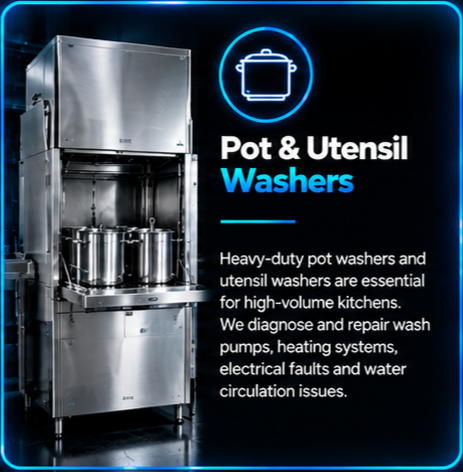
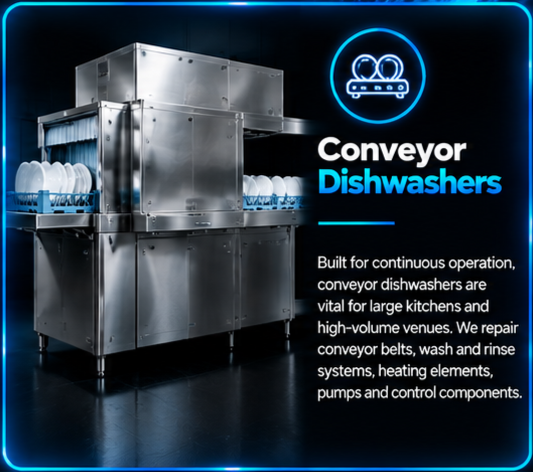
Problem With Your Pass Through Dishwasher?
Let's Diagnose Your Commercial Dishwasher Problem
When your commercial dishwasher isn't working properly, identifying the underlying cause isn't always straightforward. Many different faults can produce similar symptoms, and replacing parts without proper diagnosis can result in unnecessary expense.
Our experienced technicians have over 30 years of experience diagnosing and repairing commercial dishwashers throughout Sydney. Whether your machine isn't heating, won't drain, is leaking water or is displaying an error code, we've created practical troubleshooting guides to help you understand the possible causes and when it's time to arrange a professional repair.
Select the problem that best matches your dishwasher's symptoms below.
Heating & Temperature Problems
Water Supply & Drainage Problems
Washing & Cleaning Problems
Electrical & Mechanical Problems
Error Codes & Maintenance
Commercial Pass-Through Dishwasher Repairs Sydney
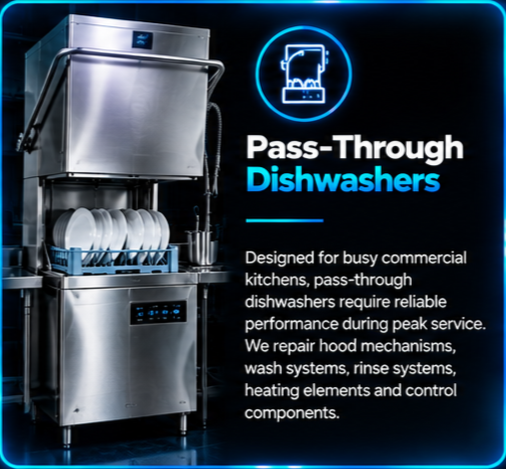
Pass-through dishwashers are designed for demanding commercial environments where large quantities of crockery need to move through the wash area efficiently.
Unlike smaller underbench machines, a typical pass-through dishwasher is integrated into a commercial dishwashing workflow with loading and unloading benches positioned around the machine.
A rack can move from the dirty side, through the dishwasher and onto the clean side.
This makes them ideal for high-volume hospitality operations.
It also means that when the machine fails:
The Dishwasher Can Become a Bottleneck for the Entire Kitchen.
Worldwide CDM diagnoses and repairs faults involving:
Wash systems
Rinse systems
Heating
Booster systems
Filling
Drainage
Wash pumps
Hood and door mechanisms
Cycle controls
Temperature systems
Water-level systems
Electrical components
Electronic controls
Chemical dosing
Scale-related problems
Water-treatment issues
Error codes
The exact configuration varies by manufacturer and model, so diagnosis should always be specific to the machine.
What Is a Pass-Through Dishwasher?
A pass-through dishwasher — sometimes called a hood-type dishwasher, hood dishwasher or pass-through commercial dishwasher — is designed around a rack-based washing system.
Rather than repeatedly loading racks through a front-opening door, the operator generally positions a loaded rack beneath the raised hood.
The hood is lowered.
The wash cycle operates.
The hood is raised.
The clean rack can then continue along the clean side of the dishwashing area.
This arrangement can provide a much more efficient workflow for busy commercial kitchens.
You'll commonly find pass-through dishwashers in:
Restaurants
Hotels
Pubs
Clubs
Function centres
Catering facilities
Aged-care kitchens
Institutional kitchens
High-volume hospitality venues
When they're operating correctly, they're built to support repeated commercial use.
When something goes wrong, the symptoms need to be diagnosed properly.
Common Pass-Through Dishwasher Problems We Repair
Pass-Through Dishwasher Not Heating
A dishwasher that isn't reaching the required operating temperature can disrupt both washing and rinsing performance.
Staff may notice:
Machine taking longer to become ready
Tank temperature remaining low
Rinse temperature not reaching its expected level
Cycles taking longer
Heating-related error codes
Poor washing results
Machine refusing to progress through its normal sequence
Possible areas requiring investigation can include:
Heating elements
Boiler or booster system
Tank heating
Thermostats
Temperature probes
Safety thermostats
Contactors
Relays
Wiring
Water level
Scale accumulation
Electrical supply
Electronic controls
A Heating Problem Doesn't Automatically Mean a Failed Heating Element.
The machine may be producing insufficient heat.
Or it may not be correctly detecting the temperature it has already reached.
Correct diagnosis needs to establish the difference.
Troubleshoot Commercial Dishwasher Not Heating →
Pass-Through Dishwasher Taking Too Long to Heat
Sometimes the dishwasher still reaches operating temperature.
It just takes considerably longer than it used to.
That's useful diagnostic information.
Possible causes can include:
Scale accumulation
Heating element deterioration
Booster problems
Electrical supply issues
Contactor or relay faults
Temperature sensing problems
Excessive incoming cold water
Incorrect water level
Control problems
There isn't one universal warm-up time for every commercial pass-through dishwasher.
Compare the machine with its own normal performance under similar conditions.
If a dishwasher that normally becomes ready relatively quickly is suddenly taking substantially longer, something may have changed.
Slow Heating Is a Symptom. Not a Diagnosis.
Pass-Through Dishwasher Not Washing Properly
If dishes are coming out dirty, the wash pump is not automatically the problem.
Poor washing performance can potentially involve:
Blocked wash jets
Wash arms
Wash-arm movement
Filters
Wash pump
Water level
Water temperature
Detergent concentration
Chemical dosing
Scale
Incorrect rack loading
Excessive food debris
Cycle selection
Other model-specific conditions
The first question shouldn't be:
"Which part do we replace?"
It should be:
"What has changed in the washing process?"
Are dishes still coming out dirty?
Troubleshoot Commercial Dishwasher Leaving Dishes Dirty →
Pass-Through Dishwasher Not Rinsing Properly
The final rinse is another important part of the operating cycle.
Symptoms can include:
Poor rinse coverage
Residue remaining on crockery
Poor drying
Streaking
Inconsistent rinse results
Rinse-related error codes
Incorrect rinse temperature
Depending on the machine, relevant areas can include:
Rinse arms
Rinse jets
Water supply
Booster system
Rinse temperature
Water pressure
Scale
Solenoid valves
Pump systems where applicable
Controls
Rinse-aid dosing
Again, one symptom can have several possible causes.
Diagnose the Rinse System Before Replacing Components.
Pass-Through Dishwasher Not Filling With Water
A commercial dishwasher cannot operate correctly without the required water supply and water level.
Possible causes of filling problems can include:
Water supply interrupted
Isolation valve closed
Restricted inlet filter
Low water flow or pressure
Inlet solenoid valve
Water-level system
Pressure switch or sensor
Pressure tube
Float system where applicable
Wiring
Control system
A machine may still allow some water into the tank while failing to reach its expected level.
So:
"Water Is Going In" Doesn't Necessarily Mean the Dishwasher Is Filling Correctly.
Pass-Through Dishwasher Not Draining
Water remaining in the machine after it should have drained can indicate a problem somewhere within the drainage process.
Possible causes can include:
Blocked filters
Food debris
Drain restriction
Drain hose
Site drainage
Drain pump where fitted
Drain valve where fitted
Water-level system
Wiring
Controls
Don't assume:
Water won't drain = failed drain pump.
The entire drainage path needs to be considered.
Troubleshoot Commercial Dishwasher Not Draining →
Pass-Through Dishwasher Pump Problems
Commercial pass-through dishwashers can depend heavily on effective water circulation.
A pump-related problem may present as:
Weak washing action
No wash circulation
Unusual noise
Humming
Intermittent washing
Poor cleaning results
Cycle interruption
Leakage around the pump area
Electrical tripping in some fault conditions
Depending on the machine, diagnosis may involve:
Wash pump
Drain pump where fitted
Impeller
Blockages
Pump seals
Motor
Wiring
Relays or contactors
Control signals
Other related components
Poor Wash Pressure Doesn't Automatically Mean the Pump Needs Replacing.
Blocked jets, restrictions, water level and other conditions can produce similar symptoms.
Troubleshoot Commercial Dishwasher Pump Problems →
Pass-Through Dishwasher Hood Problems
This is one area where a dedicated pass-through repair page becomes particularly useful.
The hood is integral to how these machines operate.
Staff may notice:
Hood difficult to lift
Hood difficult to lower
Hood dropping unexpectedly
Hood not sitting correctly
Machine not recognising hood position
Cycle not starting when expected
Water escaping around the hood area
Unusual movement
Mechanical noise
Damaged components
Depending on the design, relevant areas can include:
Hood mechanism
Springs or balancing components
Hinges
Guides
Handles
Switches
Microswitches
Actuators
Alignment
Wiring
Safety systems
A hood that physically closes doesn't necessarily mean the machine's control system knows it is closed.
Your Staff See a Closed Hood.
The Dishwasher May Still Be Receiving an "Open" Signal.
That distinction matters.
Pass-Through Dishwasher Won't Start
You lower the hood.
Press START.
Nothing happens.
It's tempting to assume the control panel has failed.
But a dishwasher may prevent the cycle from starting because another operating condition hasn't been satisfied.
Depending on the machine, possible areas can include:
Hood or door switch
Water level
Filling
Temperature
Safety system
Cycle selector
Start switch
Wiring
Pump
Electronic controls
Power supply
The Start Button Can Be Working Perfectly While Another System Prevents the Machine From Starting.
That's why symptom-based diagnosis matters.
Pass-Through Dishwasher Control Panel Problems
Commercial pass-through machines range from relatively straightforward electromechanical designs to more sophisticated electronically controlled systems.
Control problems can include:
Blank display
Buttons not responding
Touchscreen not responding
Start control not working
Intermittent controls
Display flickering
Machine resetting
Incorrect readings
Error messages
Machine freezing during a cycle
But:
The Control Panel Shows the Symptom. It Doesn't Always Cause It.
A controller may be correctly preventing operation because it isn't receiving the required signal from:
Hood switch
Water-level sensor
Temperature probe
Pump
Filling system
Heating system
Safety device
Don't replace an expensive electronic controller simply because the machine won't start.
Troubleshoot Commercial Dishwasher Control Panel Problems →
Pass-Through Dishwasher Error Codes
If your dishwasher displays an error code:
Take a Photo Before Resetting It.
Record:
Brand
Model
Complete error code
and:
What the dishwasher was doing when the code appeared.
Was it:
Filling?
Heating?
Washing?
Rinsing?
Draining?
Starting?
Error codes are not universal.
The same-looking code can mean different things on different manufacturers and models.
And even when the code is correctly identified:
The Error May Identify the Affected System — Not the Exact Failed Part.
View Commercial Dishwasher Error Codes →
Pass-Through Dishwasher Leaking Water
Water appearing around a commercial pass-through dishwasher needs to be traced back to its source.
Possible areas can include:
Hood seals or sealing surfaces
Wash-arm operation
Excessive water level
Inlet system
Drain system
Pump seals
Hoses
Connections
Internal plumbing
Overflow
Excessive foaming
Other model-specific components
Where the water appears can provide useful information.
For example:
Front of machine
may suggest something different from:
Water underneath the machine
or:
Water appearing only during rinsing.
Don't simply mop up the water and assume the machine itself is leaking from the tank.
Find Where the Water Starts.
Pass-Through Dishwasher Overflowing
If the tank is filling too high or water continues entering when it shouldn't, possible causes can include:
Water-level sensing
Pressure switch
Pressure sensor
Pressure tube
Float system
Inlet valve
Drainage restriction
Control system
If water is overflowing near electrical equipment, stop using the machine where there is a safety concern and arrange assessment.
Pass-Through Dishwasher Making Unusual Noises
A commercial dishwasher is never silent.
Pumps run.
Water circulates.
Valves operate.
The hood moves.
But your staff become familiar with what the machine normally sounds like.
A new sound matters.
Examples include:
Grinding
Rattling
Screeching
Humming
Buzzing
Knocking
Vibration
Pump noise that suddenly becomes louder
Possible causes vary depending on when the noise occurs.
A noise during:
washing
may indicate a different system from a noise during:
draining.
Tell Us When the Noise Happens — Not Just What It Sounds Like.
Pass-Through Dishwasher Leaving Dishes Dirty
Poor cleaning doesn't always mean the dishwasher is "broken."
Cleaning performance depends on several systems working together.
Water + Temperature + Mechanical Action + Chemistry + Time
A change in any one can affect the result.
Possible causes include:
Wash-arm blockage
Filters
Wash pump performance
Water temperature
Water level
Detergent dosing
Scale
Incorrect loading
Excessive food soil
Incorrect cycle
Rinse performance
This is why simply increasing detergent isn't necessarily the solution.
Troubleshoot Commercial Dishwasher Leaving Dishes Dirty →
Cloudy, Streaky or Marked Crockery
If crockery or glassware is clean but doesn't look clean, consider the finish rather than just the wash cycle.
Possible contributing factors can include:
Hard water
Scale
Detergent concentration
Rinse aid
Water quality
Temperature
Rinse performance
Chemical dosing
More chemical isn't always better.
Too much chemical can create its own problems.
Chemical Dosing Problems
Commercial dishwashing performance relies partly on correct detergent and rinse-aid dosing.
Staff may notice:
Increased chemical consumption
Container emptying unusually quickly
Container barely being used
Poor cleaning
Residue
Streaking
Excessive foam
Poor drying
Depending on the installation, possible areas can include:
Dosing equipment
Tubing
Pickup lines
Chemical containers
Calibration
Injection points
Electrical controls
Chemical dosing should be considered as part of the overall wash process rather than automatically compensating for mechanical faults by increasing detergent.
Scale Build-Up in Pass-Through Dishwashers
Sydney water conditions vary, and commercial dishwashers repeatedly heat water throughout operation.
Where hardness and water treatment aren't appropriately managed, mineral deposits can accumulate on water-contact components.
Scale can potentially affect:
Heating efficiency
Heating elements
Boiler components
Jets
Water passages
Valves
Sensors
Overall performance
But visible scale doesn't mean every fault is caused by scale.
Diagnose the Current Problem First.
Then address the conditions contributing to recurring scale where necessary.
Water Softener Problems
Where a water softener is installed, simply seeing salt in the unit doesn't prove the water is being softened correctly.
If scale keeps returning unusually quickly, water-treatment performance may need to be considered.
Depending on the installation, useful assessment can include checking water hardness and whether treatment is actually reducing it as intended.
Treat the Water Problem — Not Just the Visible Scale.
Pass-Through Dishwasher Tripping the Power
Repeated electrical tripping should not be ignored.
Possible areas can include:
Heating components
Pumps
Wiring
Moisture ingress
Electrical connections
Contactors
Other electrical faults
Don't repeatedly reset protective devices to force the machine to continue operating.
Internal electrical diagnosis should be performed by appropriately qualified personnel.
Commercial dishwashers combine:
Water + Heat + Electricity.
Should We Repair or Replace Our Pass-Through Dishwasher?
Not every fault means the machine needs replacing.
And not every older machine is automatically worth repairing.
The decision should consider:
Nature of the fault
Overall machine condition
Age
Parts availability
Repair history
Scale condition
Reliability
Cost of repair
Operational requirements
A correctly diagnosed repair may extend the useful life of an otherwise serviceable machine.
On the other hand, repeatedly spending money on a machine with multiple significant problems may not make commercial sense.
Good Advice Isn't Always "Repair It."
The right answer depends on the machine.
What Staff Can Safely Check Before Calling for Service
Before booking a technician, your staff can perform a few basic operator-level checks.
Check the power
Confirm normal operator-accessible switches and isolators are in their expected operating position.
Check the water supply
Make sure the normal water supply hasn't been turned off.
Check the hood
Confirm it closes normally and isn't obstructed.
Check the filters
Ensure operator-removable filters are clean and correctly positioned.
Check wash and rinse arms
Follow the manufacturer's normal cleaning instructions and check accessible jets for obvious blockage.
Check for an error code
Photograph it.
Check underneath the machine
Look for obvious water leakage without removing electrical covers.
Listen
Tell us if a new noise occurs during washing, rinsing or draining.
Record when the fault happens
This can be extremely useful.
What Not to Do
Don't:
Bypass hood or door switches
Bridge safety interlocks
Open electrical panels without appropriate qualifications
Replace the control board based on a guess
Replace a pump just because dishes aren't clean
Increase chemicals without understanding the cleaning problem
Repeatedly reset electrical protection
Ignore water around electrical components
Keep operating equipment producing smoke or a burning smell
The aim is to restore the machine properly.
Not simply force it through another cycle.
How Worldwide CDM Diagnoses Pass-Through Dishwasher Problems
1. Understand the Symptom
What is the machine actually doing?
Not heating?
Not filling?
Not washing?
Not draining?
Not starting?
Leaking?
Showing an error?
2. Identify When It Happens
During:
Startup → Filling → Heating → Washing → Rinsing → Draining?
This helps narrow the relevant system.
3. Inspect the Relevant Components
Testing depends on the fault rather than automatically checking every component.
4. Separate the Symptom From the Cause
For example:
Symptom: Machine won't start.
Possible cause: Hood isn't being detected.
Or:
Symptom: Poor cleaning.
Possible cause: Wash jets are restricted.
Or:
Symptom: Heating error.
Possible cause: Temperature sensing rather than the heating element itself.
5. Explain What We've Found
We provide straightforward advice about what is actually wrong.
6. Repair What's Required
Find the Cause. Fix What Matters.
Why Correct Diagnosis Can Save Your Business Money
Consider this:
Your pass-through dishwasher won't start.
Someone assumes:
Control board.
An expensive board is ordered.
The machine still doesn't start.
The actual problem was the hood switch.
Or dishes aren't cleaning.
Someone assumes:
Wash pump.
The pump is replaced.
The result doesn't improve.
The wash jets were restricted.
Or the dishwasher displays a heating problem.
Someone orders:
Heating element.
But the machine wasn't correctly detecting temperature.
This is why Worldwide CDM's approach is built around diagnosis.
Symptom → System → Testing → Cause → Repair
Not:
Symptom → Guess → Parts.
Find the Cause. Fix What Matters.
Pass-Through Dishwasher Brands We Service
Worldwide CDM works with commercial pass-through and warewashing equipment from brands including:
Machine configurations vary by manufacturer and model.
That's why we diagnose the specific machine in front of us, rather than applying the same assumption to every pass-through dishwasher.
Pass-Through Dishwasher Repairs for Sydney Hospitality Businesses
Worldwide CDM supports commercial kitchens across Sydney, including:
Restaurants
Hotels
Pubs
Clubs
Cafés
Cocktail bars
Function centres
Catering businesses
Commercial kitchens
Institutional facilities
When your pass-through dishwasher is responsible for keeping hundreds of plates moving through a busy kitchen, downtime isn't simply inconvenient.
It affects the whole operation.
More Than 30 Years of Commercial Catering Equipment Experience
Worldwide CDM is a family-run commercial catering equipment business with more than 30 years of experience.
We understand what equipment downtime means during service.
Your chef doesn't want a technical lecture.
Your kitchen hand doesn't want to spend the night troubleshooting machinery.
And your business doesn't want to buy parts it doesn't need.
You want to know:
What's wrong?
What caused it?
What actually needs repairing?
That's the role Worldwide CDM plays.
You're running the kitchen.
We're here to help keep the equipment behind it working.
Find the Cause. Fix What Matters.
Keep Serving Customers With Confidence.
Frequently Asked Questions
Do you repair pass-through dishwashers in Sydney?
Yes. Worldwide CDM diagnoses and repairs commercial pass-through and hood-type dishwashers across Sydney.
What is another name for a pass-through dishwasher?
Pass-through commercial dishwashers are also commonly described as hood-type or hood dishwashers.
What types of businesses use pass-through dishwashers?
They're commonly used in restaurants, hotels, pubs, clubs, function centres, catering operations and other high-volume commercial kitchens.
Why won't my pass-through dishwasher start when I close the hood?
Possible causes can include the hood switch, alignment, water level, temperature, safety systems, controls or other operating conditions. The start control itself isn't necessarily faulty.
Why isn't my pass-through dishwasher heating?
Possible causes include heating elements, boiler or booster components, thermostats, temperature probes, contactors, relays, scale, water level, electrical supply or controls.
Why is my pass-through dishwasher taking so long to heat?
Slow heating can involve scale, heating components, electrical supply, temperature sensing, water level, incoming water conditions or control components.
Why is my pass-through dishwasher leaving dishes dirty?
Possible causes include blocked wash arms, filters, wash pump performance, water temperature, water level, detergent dosing, scale, loading and cycle selection.
Does poor cleaning mean the wash pump has failed?
No. A pump problem is only one possible cause. Restrictions, wash arms, filters, temperature, water level and chemistry can produce similar symptoms.
Why won't my pass-through dishwasher drain?
Possible causes include blocked filters, drain restrictions, hoses, site drainage, pumps or valves where fitted, water-level systems and controls.
Why is water leaking from my pass-through dishwasher?
Leaks can involve hood sealing, water level, pumps, hoses, connections, drainage, wash arms, excessive foaming or internal plumbing. The source needs to be identified.
Why is my pass-through dishwasher hood difficult to lift?
The hood mechanism may require assessment for mechanical wear, balancing components, alignment or other model-specific issues. Don't continue forcing a hood that has become unusually difficult or unsafe to operate.
Why does my dishwasher say the hood is open when it's closed?
The physical hood position and the electrical signal received by the controller are different things. Alignment, switches, actuators, wiring or controls may require investigation.
Do you repair pass-through dishwasher pumps?
Yes. Pump-related problems can be diagnosed to determine whether the pump itself or another part of the wash or drainage system is responsible.
Can scale damage a commercial pass-through dishwasher?
Scale can affect heating and water-contact components and may reduce performance over time. Water quality and treatment should be considered where scale is recurring.
Should I replace my old pass-through dishwasher instead of repairing it?
It depends on the fault, machine condition, repair history, parts availability, age and repair cost. A diagnosis allows you to make that decision with better information.
Can staff repair a commercial dishwasher electrical fault?
Internal electrical diagnosis should be left to appropriately qualified personnel. Commercial dishwashers combine water, heat and electricity.
What information should I provide when booking a repair?
Where possible, provide the brand, model, symptoms, error code or a photograph/video of what the machine is doing.
Pass-Through Dishwasher Down During Service?
Your Kitchen Needs Answers — Not Guesswork.
When a pass-through dishwasher stops working, the fastest-looking solution isn't always the right solution.
A pump symptom doesn't always mean:
Replace the pump.
A heating error doesn't always mean:
Replace the element.
A machine that won't start doesn't always mean:
Replace the control board.
Worldwide CDM identifies what the machine is doing, investigates the system responsible and determines what actually needs attention.
30+ Years' Commercial Equipment Experience
Commercial Pass-Through Dishwasher Repairs
Sydney Service
Family-Run Business
Commercial Equipment Specialists
Straightforward Advice